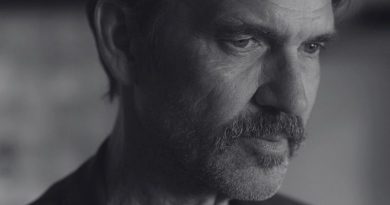
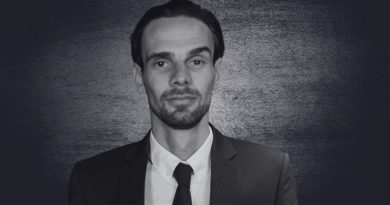
Nico Scheepers on ‘Hen’, ‘Landmyn’ and the Art of Fridge Poetry
South African writer-director Nico Scheepers pulled off an audacious creative double bill: writing and shooting two feature films under tight budgets and punishing deadlines within seven months. The first, Hen, is a stark, black-and-white psychological horror that stormed Europe to take the prestigious H.R. Giger Narcisse Award for Best Film at the Neuchâtel International Fantastic Film Festival. The second, Landmyn, won 7 Silwerskermfess awards… a razor-edged domestic pressure cooker framed through the uncompromising gaze of a single 35mm lens.
For Scheepers – a theatre visionary turned screen auteur whose TV series Donkerbos and Nêrens, Noord-Kaap set new benchmarks for local storytelling – the process was an exhausting, exhilarating trial by fire. Sitting down with Spling, Scheepers unpacked the shared DNA of his twin features, his counter-intuitive approach to directing actors and why the editing suite always feels like assembling poetry from magnets on a fridge door.
The Seven-Month Gamble
Scheepers never expected his first feature to be a horror film. But after years of watching the Afrikaans film landscape gravitate toward familiar, safer genres, he found himself increasingly frustrated by the absence of genre filmmaking.
“I remember thinking, where is the Afrikaans sci-fi film? Where is the fantasy film? Where is the horror? Afrikaans cinema has such a rich language, mythology and cultural history to draw from, and yet we aren’t really seeing filmmakers given the opportunity to explore those spaces. I think Hen grew out of that frustration, and out of a desire to make the kind of Afrikaans film I desperately wanted to see.”
Scheepers pitched an uncompromising, slow-burning arthouse horror in monochrome. But before a frame was shot, his producing partner at Nagvlug Films, Chanél Muller, introduced the creative crucible that would define the film.
“Chanél is extremely religious, and I’m not. When I pitched Hen, she challenged me: ‘Nico, I’m someone who hates horror movies. Make something I want to watch. Nothing that involves the occult or overt Satanism.’ She built the first wall of this box of restrictions, which was so incredibly valuable. It made me land on the fact that it’s actually more interesting to have a character responsible for the violence, but you have empathy with them.”

No sooner had production wrapped on Hen than corporate restructuring and funding freezes hit the industry. Facing the prospect that Nagvlug might go under, the team chose defiance over surrender. With a small pool of capital left and a mandate to “go out with a bang,” Scheepers wrote and lensed Landmyn back-to-back.
“In that seven-month span, I wrote and shot my first two movies – which I never want to do again in my life,” Scheepers admits. “When I showed Carla [Smith] the film just before Silwerskerm, she sat back, loved it, and then said: ‘Do you realise that Landmyn and Hen have the same structure?’ I started putting the timelines over each other in my head, and there were so many similarities: this complicated, antagonistic, empathetic character leaving at the end, the ambiguous nature of everything. The subconscious is a monster.”
Both films even locked their rough cuts at an identical 107 minutes, prompting Scheepers to playfully pad Landmyn’s credits by three minutes to break the uncanny symmetry.
Hen: A Message Tied to a Pigeon’s Leg
Without substantial marketing muscle behind an indie genre title, Scheepers viewed Hen as a messenger sent to the beyond.
“We don’t own the film, so I wanted to make something that we could tie to the leg of a pigeon and send out across the border to see if anyone bit. Something we’re proud of, something unapologetic.”
After the customary string of festival rejections, the Glasgow Film Festival stepped in with an impassioned acceptance letter. Soon after, Hen was accepted into Neuchâtel in Switzerland and Sitges in Spain – the twin titans of European genre cinema.
Screening an intimate Afrikaans horror to international audiences yielded a unique cultural dislocation:
“Watching the film with 400 cinephiles who don’t speak a word of Afrikaans, people came up to me afterwards asking, ‘What language is that?’ The fact that they didn’t recognise the language made it even more foreign for them. They couldn’t place the film geographically, which added this whole other layer of mystique.”
The ultimate validation arrived on closing night in Switzerland:
“The head of the jury was this Irish critic, and she started talking about ‘this black-and-white film about what happens when your prayers are answered, but they shouldn’t have been.’ My partner and I just grabbed each other’s legs. Winning the H.R. Giger Award, with a trophy that has the Alien legs sculpted into it, was just f**king cool.”
Central to Hen’s haunting resonance is its child lead, Dawian Van Der Westhuizen, whom Scheepers discovered years prior during an open casting call for Nêrens, Noord-Kaap. Van Der Westhuizen had submitted an unprompted audition video nonchalantly solving a Rubik’s Cube while chatting to the camera. When Hen went into prep, Scheepers bypassed hundreds of submissions and cast him directly:
“With children, I almost always want to work with kids who haven’t been directed before, who haven’t been on stage, who haven’t been taught wrong. They can just believe effortlessly on set.”
Landmyn: Claustrophobia on a Single Lens
If Hen draws its dread from the vast unknown, Landmyn finds its terror within the confines of domestic familiarity. To visually trap the characters, Scheepers and cinematographer Chris Lotz locked the production into a single focal length:
“I said to Chris from the start, ‘I want to shoot this on one lens.’ We chose a 35mm because 35 to 40mm is the closest to the human eye. The camera is just caught in the house, claustrophobic. It freed us up completely because the camera was always ready. We could move quickly and shoot more, without wasting thinking time on changing lenses.”

That technical agility gave Scheepers room to navigate volatile emotional terrain with seasoned performers like Anna-Mart van der Merwe and Nicole Holm. Scheepers views directing actors less as an intellectual exercise and more as psychological architecture:
“No human being on Earth has as much introspection about a themselves as an actor has about a character. So sometimes, when a performance isn’t working, they’re just thinking too much. All they actually need is business. You tell one actor, ‘All you want is a glass of water,’ while the dialogue is about something completely different. And you tell the other actor, ‘Don’t move away from the sink; just block it.’ Suddenly, there’s this weird, authentic body tension in the scene.”

This collaboration proved crucial during one of Landmyn’s most emotionally gruelling moments, where Anna-Mart van der Merwe’s character breaks down behind a closed door:
“We did six takes, and Anna-Mart was giving everything, running on fumes. She had her back to the corner so we could see her crying, but something felt wrong. She looked at me and said, ‘If I’ve got my back to the corner, it feels like I can see myself crying, which feels like weakness.’ The character wouldn’t cry in front of herself; it was against her survival instinct. For take seven, she turned directly into the wall like a little girl, and it became this breathtaking, believable moment.”
Fridge Poetry and the Director’s Jumper
Reflecting on the frantic pace of South African filmmaking – where a production might churn through 15 script pages a day – Scheepers holds tight to an essential truth about the life cycle of a film:
“You write a film three times. When you write a script, you have the whole dictionary available to you. When you shoot those pages, it’s something completely different. And when you edit, you have fridge poetry. You only have the magnets you shot. You can’t dream up anything new. You have to quiet the voice focusing on what ‘should have been’ on set, forget there ever was a screenplay, and fall in love with what you have. You can’t be mad at your cut, because nothing else exists.”

That discipline demands absolute decisiveness on set. Citing an anecdote from Alfonso Cuarón, Scheepers describes directing as an act of continuous, unapologetic commitment:
“Cuarón said someone came up to him on set and asked, ‘Red jumper or yellow jumper?’ He answered, ‘Yellow jumper.’ It doesn’t actually matter which jumper you pick; you must just choose. Every second of the day, you have to know you’re right, even when you’re wrong. A painter doesn’t talk to his paint about the picture.”
Scheepers is already deep into pre-production on a third feature – a tight, three-hander tragedy he describes as even darker than Hen – alongside developing a soft sci-fi concept and an elusive comedy. Looking to directors like Steven Soderbergh and Luca Guadagnino, he views genre hopping as the natural impulse of an active cinephile:
“The same guy who made Call Me by Your Name made Bones and All. Genre hopping makes perfect sense because your sensibilities will always come through. Film is only about 120 years old; it’s literally still a baby. What a privilege to work in this medium.”