
Movie Review: Thus Spake Zolani
One-liner: A defiant, disturbing, grotesque, provocative and visceral black-and-white visual masterpiece.
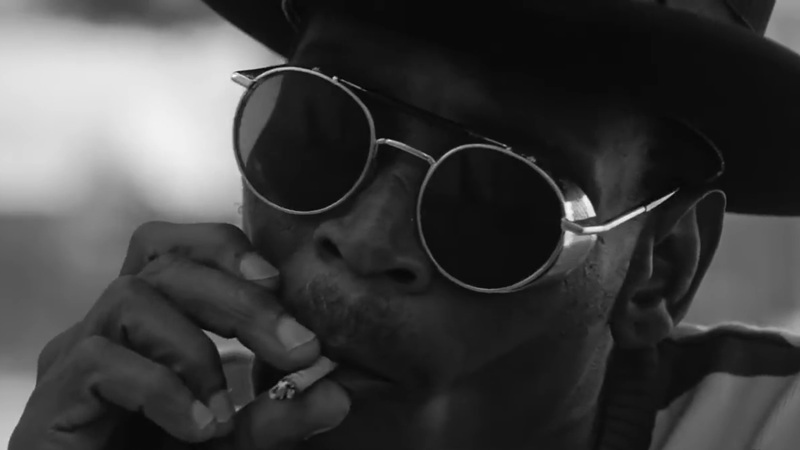
Thus Spake Zolani is a black-and-white crime drama and revenge thriller by Clive Will. Serving as an unofficial sequel to Time Spent with Cats is Never Wasted, the film operates with a strikingly similar cinematic DNA. Zolani awakens half-naked on the outskirts of a small town and is compelled on a violent rampage, fueled by a TV evangelist and a mission to kill a movies star.
The first point of comparison is its arthouse niche aesthetic. As an odyssey journeying with its protagonist, the choice to shoot in black-and-white does more than just accentuate the visuals; it thrives on contrast and paradoxically diminishes the true gravity of the extreme violence. By rendering blood as dark ink instead of vivid crimson, Will undercuts the graphic immediacy of the depravity, providing a necessary buffer for the audience during the film’s most intense, visceral moments.
The thematic content mirrors Time Spent with Cats is Never Wasted, creating artistic yet frantic sequences where a beautifully composed shot is suddenly shattered by violence. There is a definite shock value at play; Will seems to be testing the audience’s tolerance, seeing exactly how much they can endure. Sparsely scripted, the film relies on visual storytelling. Zolani moves through the narrative like a figure in a “road movie” or a modern Western, his spate of violence feeling increasingly lawless.
Instead of the classic Western trope where a “man with no name” arrives to save the day, Thus Spake Zolani presents the converse. A sense of lawlessness pervades the world, dismissing the inept police presence early on. Zolani encounters almost no opposition, moving freely and without consequence. It is a rampage devoid of moral conscience, attaching zero value to human life.
There is a nihilism beneath it all that likely ties into the inspiration behind the title. Referencing Friedrich Nietzsche’s ‘Thus Spoke Zarathustra’, the film suggests a version of hell where, if everything means nothing, the lead is simply attempting to feel something -finding meaning in the void. While this philosophical framing gives the film impetus, it remains, unfortunately, too shocking for most tastes.
Even for ardent arthouse lovers, the graphic depictions are unsettling. There’s a clear attempt to provoke the audience, from the grisly murders to the “prickly” soundtrack, which at one point features a prolonged period of incessant dog barking and a preacher using an electrolarynx. This effect is more agitating than atmospheric, adding to the hostility of the world. The editing conveys symbolic meaning through a penchant for bric-a-brac and outdated media, all while being beautifully photographed in every frame.
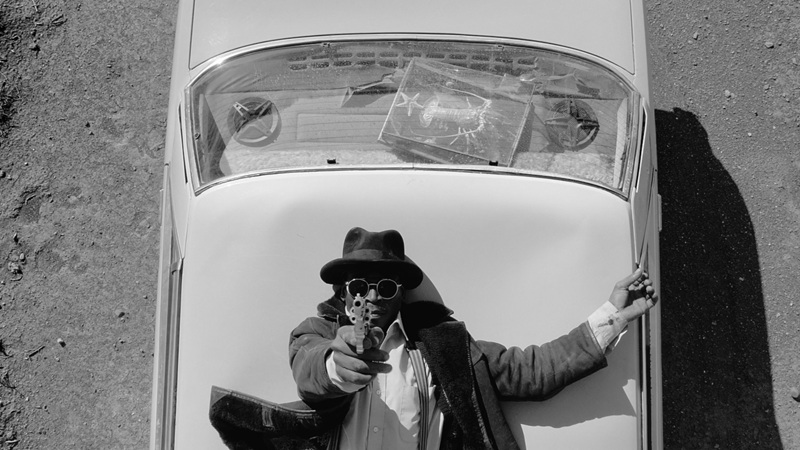
“Don’t rain on my parade.”
It’s difficult not to appreciate the technical agility on display. Like its predecessor, this is a visual masterpiece, concocting a nightmarish yet stylish entry, amplified by Clive Will’s daring and indulgent over two-hour vision. It’s certainly not for the faint-hearted; it would be surprising to hear about a screening where a few people didn’t walk out. The violence begins early and never relents, dipping into shock tactics ranging from bodily functions to cold-blooded murder. Nothing is sacred in this “wild splurge.” Yet, the film possesses a timeless feel, established through its monochrome cinematography and the “forgotten place” undertow.
The visual flair gives the movie an otherworldly quality, using everyday objects and fashion to create something divergent against the backdrop of a dilapidated, decaying town. Because there is so little dialogue, the audience never truly understands the motivation behind the mounting body count. While there is poetry in the visuals, the interjection of detestable images creates a haunting “ugly-beautiful” duality.
There is something inherently thrilling about a film so liberal and devoid of a moral compass. Those who have seen the three-hour Time Spent with Cats is Never Wasted will know what to expect from this brand of “slow cinema,” though Will opts for a slightly quicker pace here.
By tagging onto the archetype of the Western star and dedicating the film to Johnny Depp, Will hints at an overarching message, though it can feel like a chore to navigate so much darkness just to find a glimmer of light. Steering away from close-ups and traditional actors when it comes to casting, the naturalistic performances lend a sincerity to the screen, and the rare moments of comic relief – particularly involving a motel “manager” – are a welcome break from the tension.
What Clive Will has executed on a limited budget is incredible. The provocative nature of this film makes it extremely divisive. While it would be fascinating to see his talents applied to a “lighter” subject, he is clearly a filmmaker who refuses to pull punches. It’s an uncomfortable experience, but one that reaffirms the raw power of cinema.
By pushing artistic boundaries, Thus Spake Zolani is destined to stir debate. While the theatre may be half-empty by the time the credits roll, it makes for a memorable, albeit nightmarish, occasion. It showcases a singular eye for visuals and a flair for storytelling, leaving one curious to see how Will would tackle a more conventional narrative. While we should encourage voices that redefine cinema, there is a valid question about creating work accessible enough to actually draw an audience.
Ultimately, the film is so niche that it might feel more at home in an art exhibition than a cinema. It’s a truly difficult film to “like,” but one that must be appreciated for its devastating vision. Whether viewed as a political statement or a piece of visual poetry, it is as elusive and haunting as the film that preceded it.
The bottom line: Visceral
No rating


