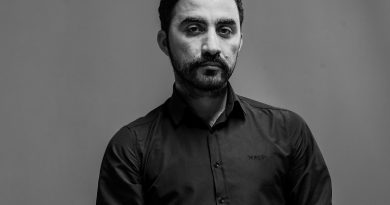
License to be Inappropriate: Albert Pretorius on the Edge and Art of ‘Die Kantoor’
It takes a specific blend of courage and comedic timing to step into a role already immortalized by icons like Ricky Gervais and Steve Carell, but Albert Pretorius is more than up to the challenge to punch the clock as Flip in Die Kantoor, the South African reimagining of The Office. Much like his counterparts, Pretorius is known for his versatility as a film and television actor, known for key roles in The Seagull, Johnny is nie dood nie, Catch Me a Killer and Devil’s Peak, Nêrens, Noord-Kaap and now Die Kantoor.
Navigating the pressure of a revered global franchise, Albert delves into the “cringe factor” of the local corporate landscape and the terrifying, albeit liberating, responsibility of making a legendary character his own. From the structured chaos of the set to his comedic chemistry with Schalk Bezuidenhout, this interview explores how Albert found the heart (and the humour) in television’s most famously awkward boss, and why some characters are simply too much fun to leave behind at the end of the work day.
Did you feel a lot of pressure taking on such a revered franchise?
Yeah. That was quite… I was very… “Scared” is the wrong word, but… because I’m such a big fan. And you don’t want to mess up one of the greatest, in my opinion, franchises of comedy TV ever. And going in, you immediately know you are going to get compared to two of the best comedy actors of the last 20 years. There’s no way you’re going to play that character and someone is not going to have David Brent or Michael Scott in their heads.
I questioned, why are we doing it now? It’s 25 years after the original. What can we add? …then, Bennie [the director] gave me such a great answer and I couldn’t say no. Because he said… “I would be very upset if I sit on my couch and I watch it and someone else messed it up. If it’s a flop, let me be the one to mess it up.” And I felt exactly the same. Let me give it my all so I don’t have to sit there thinking it was a missed opportunity.
How do you think playing the most famous boss in television history will change things for you?
I don’t think it will much… I try not to think of “career” in a sense of “What is this going to do for me?” I think Mads Mikkelsen said it best: “If you only think about your career and where you want to be… you end up not having a great career, then you have nothing. But if you do the projects and you just love doing every project, maybe at the end of it you’ll have a career.”
Flip feels designed for a South African context. He earns his own place.
Yeah, but he’s designed for a South African… I specifically, when I heard, like, I didn’t touch any material because I didn’t want any mannerisms. But the style—the costume, the looking at the camera—it just happens. I didn’t want to give a slow look to camera, but it happened. And you’re like, “Shit, was it too much Brent?” And I’m like, “No, it’s just the style.” They tell you, look into the camera. And it just felt right.

Die Kantoor is satirical and probing. It’s the “cringe factor.”
I know, but for some people, if that is your reality also, you don’t always get the cringe because it’s not funny because my boss talks to me like that and my husband still makes those inappropriate jokes or whatever. Yeah. So that’s the other side of it where you’re like, I don’t want to tell people it’s okay what we’re saying. And I think the show does that great with the other characters. When Flip says something inappropriate, the other characters would look into the camera and shake their heads. Knowledge, yeah. We’re always acknowledging that it’s not right what’s going on.
So there was obviously a lot of improv allowed?
It’s actually much more structured than you think. The comedy works because the heart of the show lies in the structure; you need the payoff at the end. I thought there was improv, but they kept close to the structure… Bennie would come like, “I just need that line clear because two scenes from now, that line has an impact on that and we might lose what you just said in the edit.” So you can improvise, but get that line out first. Or our page count is too high, so we have to [trim]… what I love most is he just gave us time to play.

What was it like working with Schalk Bezuidenhout?
Schalk was quite amazing… it’s also, it’s not a fear, but you’re like, cool, I’m with a real comedian in these scenes. He might not find me funny or he might give me notes to make me funnier… and he was the most generous person. He never tried to interfere with what I was doing. He would just, whatever I gave him, he would give back ten times.
How do you protect your own mental space? None of [your roles] have ever haunted you, would you say?
I’m quite good at leaving… With Flip… my fiancé would say he’s stuck around a bit. Because when you have such great license, because we improvised a lot in the show as well… Bennie on the first day told the cast and crew, “Listen, for the next seven weeks, anything that comes out of Albert’s mouth, do not be offended, he has license.”
And then once or twice, we went for a drink after a Friday shoot, me and my fiancé, and the one guy made a joke and I made a joke back. I was very Flip. So I guess some of it stuck around. But the shoot was also… we’re shooting 12 pages today… the whole time I was busy with Flip.
And you really do love Flip?
I really do love Flip. I never thought I would say the things I said in the show. There’s a sense of freedom about it.