
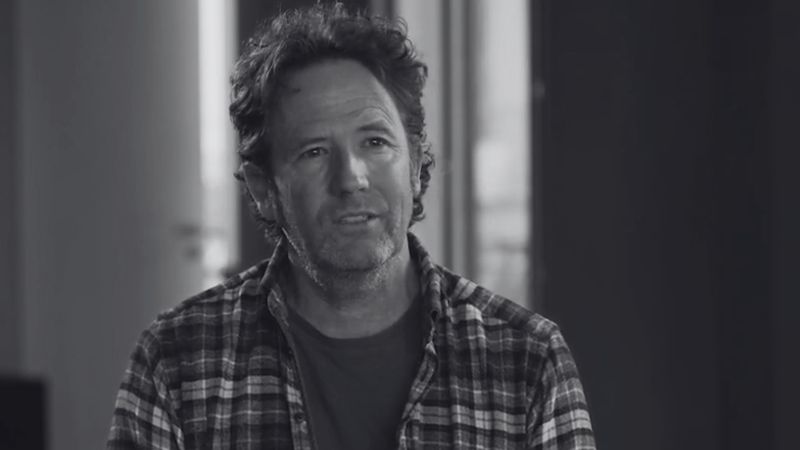
Jonty Acton on ‘The Reconciliation’
For many filmmakers, the spark of inspiration is a galaxy far, far away. For Jonty Acton, it started with the playground politics of Star Wars and the ritual of watching the finale of Return of the Jedi every morning before school. But while his origins are rooted in high-octane escapism, his destination is something far more intimate, grounded and uncomfortably close to home.
In a recent deep-dive interview with Spling, Acton opened up about his journey from a horror-obsessed “B-movie” debut to his upcoming feature, The Reconciliation. It’s a project five years in the making, funded by the NFVF, and poised to hold a mirror up to the dinner tables of white, English-speaking South Africa.
From London to the “Independent” Hustle
Acton’s career is a testament to the “long game” of independent cinema. After studying at UCT and the London International Film School, he cut his teeth on a B-movie horror script written in just two weeks.
“I looked at it and I thought, ‘No, hang on, if I’m going to do this properly, I need to actually learn the craft in a more serious way,'” Acton recalls.
This realisation led to years of “odd jobs,” teaching sports in the mornings while developing scripts in the afternoons. Rejecting the rigid structure of commercial film sets, Acton built his own production company, eventually producing a 13-part documentary series without traditional funding. This “independent spirit” has culminated in The Reconciliation, a film that refuses to fit into a neat genre box.
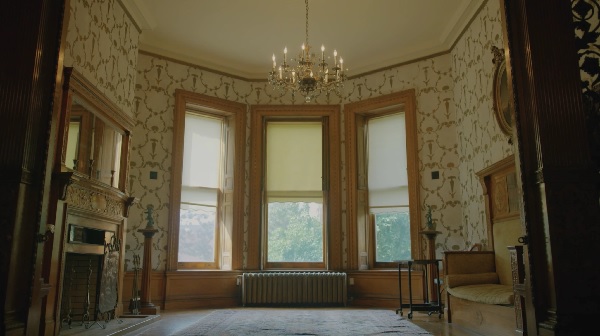
The Seed: A Christmas Ritual
The core of The Reconciliation is semi-biographical, rooted in an unusual family tradition: Acton’s divorced parents would spend every Christmas together in the same house they once shared, bringing along new partners and maintaining a sense of normalcy.
The Two Reconciliations
Acton draws a sharp parallel between the domestic and the national, juxtaposing the family get-together where the “real issues” are left unspoken and a country that went through a formal reconciliation process has left many honest conversations and apologies on the cutting room floor.
“We’re fuddling through and muddling through,” Acton says. “Are those conversations around the dinner table the same as the national conversations we’re all having?”
Visual Language: Suffocation and Stagnation
Acton’s directorial influences are a high-brow cocktail of Russian social realism and British naturalism. He cites Andrei Zvyagintsev (The Return) for his use of location as an antagonist and Mike Leigh (Secrets & Lies) for his tragicomic character depth.
To convey the “stagnation” of the family home – a privileged, multi-generational Cape Town house – Acton is employing a specific visual strategy:
The exterior arrival leans toward handheld, fluid and kinetic energy to represent the world outside. While the interior reality hinges on locked-off frames and still shots. As the characters enter the house, the frame begins to “suffocate” them, mirroring the weight of inherited history and unaddressed prejudice.

The Cape Town “Rigidity”
The film is set in Cape Town, a city Acton describes as significantly different from the “new money” energy of Johannesburg. For him, Cape Town represents a “generational wealth” and a rigid social structure that can feel exclusionary.
“Cape Town feels much more established and more rigid. How do we break free from that? How do we open up and allow more space for a new identity?”
The film doesn’t aim to be a “Big P” political film about historical heroes. Instead, it’s an “iceberg” story – mining the 90% of South African history that remains submerged beneath the surface of polite society.
The Road to 2027
With a full South African cast and a shooting date set for October 2026, the project is currently in the final stages of a crowdfunding campaign to bridge the remaining financial gaps. Surprisingly, Acton notes that the feedback from the white, English-speaking community has been largely positive -even when the story “pushes uncomfortable buttons.”
One donor’s comment summarized the film’s intent perfectly: “This film is going to make me very uncomfortable. But here is some money because I’m happy to sit in the discomfort and experience it.”
The Reconciliation is aiming for a premiere at Berlinale in February 2027, followed by a domestic release. It promises to be less of a “history lesson” and more of a “wake-up call” – asking us all what the true cost of reconciliation is when the truth remains unsaid.


