
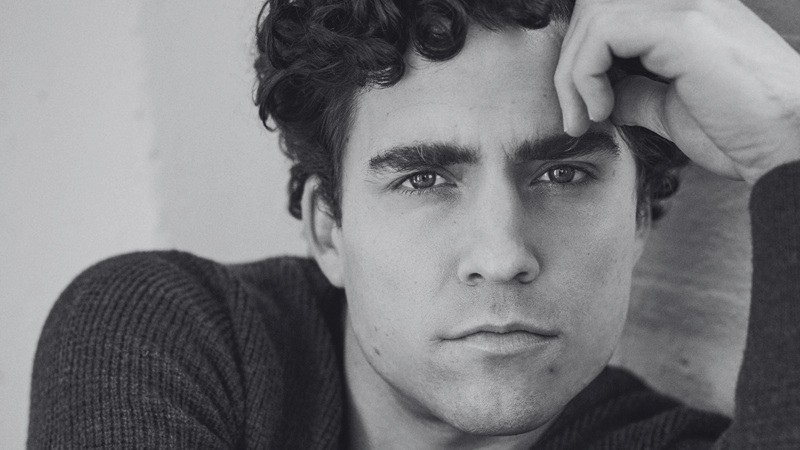
Adam Wesley on the “No Sacrifice, No Glory” Mindset
There’s a distinct difference between changing your career and changing your life. A career change requires a rewritten resume and a few awkward networking coffees. A life change, the kind that alters your very cellular makeup, demands something entirely different: it demands a bonfire.
When actor Adam Wesley – currently making waves in the romance-thriller hybrid The Lonely Crowd – decided he was done with his first life, he didn’t just pivot. He burned the boats.
In a candid, sprawling conversation with international film critic Stephen Spling Aspeling, Wesley revealed the staggering mechanics of his mid-life leap of faith. This isn’t the story of a starry-eyed kid stepping off a bus in Hollywood with a suitcase and a dream. This is the story of an established, award-winning artist who reached his absolute limit, looked into the abyss, and chose to jump.
The Fifteen-Year Burnout
Before he was Peter, the brooding, lion-hearted hero of The Lonely Crowd, Adam Wesley was a musician. And he wasn’t just hobbyist strumming a guitar in local bars; he had pedigree, training, and genuine skin in the game.
“I was at a very low point in my life doing music and I did that for many years. I did it for over 15 years. I went to school for music. I went to Berklee College of Music and I toured. I wrote songs that were on the radio. I got awards.”
But a decade and a half in the music industry leaves scars. The constant shift between artistic highs and commercial lows takes a psychological toll. When the global pandemic hit, compounding a musical collaboration that “went really downhill,” Wesley found himself spiritually depleted.
He did what many burnt-out creatives do: he looked for a safe, practical exit strategy. He enrolled in school for kinesiology, aiming for a stable doctorate in physical therapy. It made sense on paper. He had spent over a decade as a competitive soccer player and martial artist. But you cannot trap an artist in a conventional cage for long.
“I don’t think I lasted two months in school when I thought… You know that quote that you look at yourself and you’re like, ‘I’m meant for bigger things than just to be in biology class.'”
The Vegas Echo Chamber
While Wesley was suffocating over biology textbooks, the universe began dropping aggressively loud hints. He was living in Las Vegas at the time – not exactly an actors’ mecca – yet a strange phenomenon started happening wherever he went.
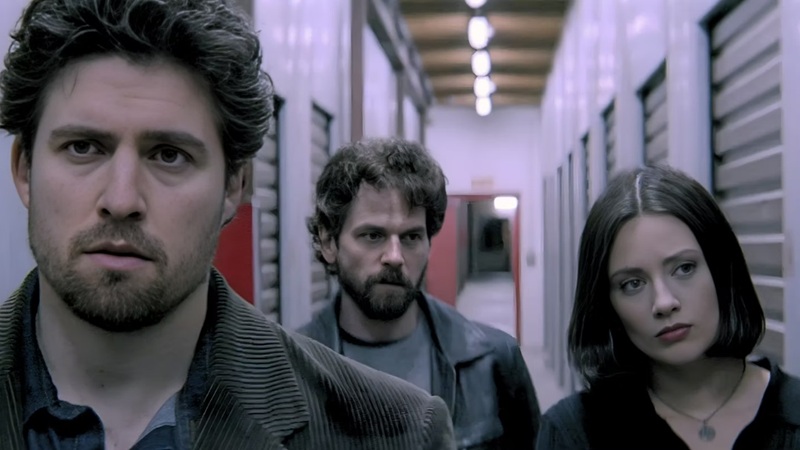
“Everywhere I went, people were going… ‘Are you an actor?’… I probably had eight people ask me that. I was like, it’s so funny you say that because no, I’m not an actor. But in the back of my mind at that point… I was like, oh, maybe I should pursue acting.”
The final cosmic nudge came from his university counsellor. When Wesley finally confessed his secret desire to perform, the counsellor didn’t offer a traditional academic lecture. Instead, he looked at Wesley and admitted that from day one, Wesley possessed the unmistakable “persona” of a performer. He handed him a copy of Ivana Chubbuck’s definitive acting bible, ‘The Power of the Actor’.
That was the spark. What followed was the bonfire.
The Liquidation
When Wesley decided to commit, he bypassed the typical half-measures. He didn’t keep his instruments as a fallback plan. He didn’t keep his car in case things got tight. He liquidated his entire existence to fund his entry into the Los Angeles ecosystem.
“Long story short, I get out of school. I go straight. I sell all my music equipment. I sell my car. I sell everything. And I have good equipment. I have really nice instruments. And I gave it all. I sold it. I sold it all like I had everything. I got rid of clothes, everything. I came to L.A.”
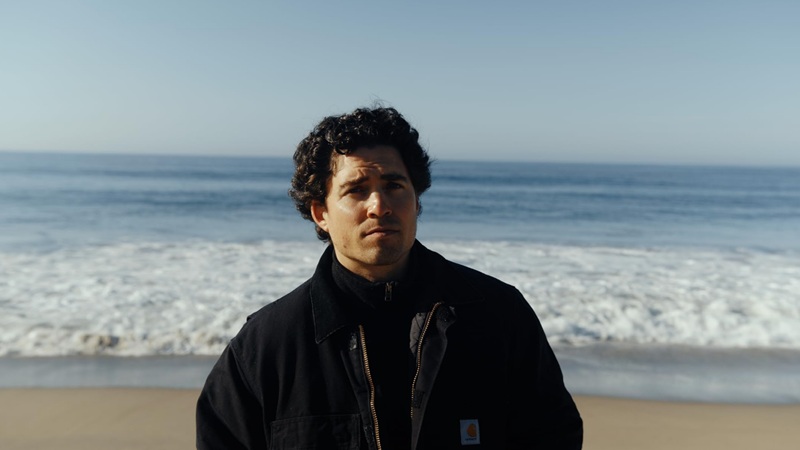
“That’s the discipline,” film critic Spling noted during their discussion. “That’s the diligence that’s required. That’s the risk to take. And you know that you’re going to be able to pick up the pieces even if you fail.”
Wesley’s radical commitment was immediately rewarded by a sequence of events bordering on the supernatural. Shortly after arriving in LA, he literally bumped into Ivana Chubbuck – the legendary acting coach whose book his counsellor had given him – randomly on the street, and then again at a grocery store. They struck up deep conversations about life and death, leading Wesley to work his way up to attending her masterclass.
The Athlete’s Method
Stepping onto a film set for the first time just two and a half years ago, Wesley brought an unconventional toolkit with him. Acting can often be a floaty, abstract discipline, but Wesley approaches it with the raw, mechanical work ethic of a professional athlete.
For his role in The Lonely Crowd, he tapped into his athletic history to portray a retired, injured baseball player spiralling into substance abuse. He didn’t just act heavy, he made his body heavy. “I gained some weight, I felt a little heavier… I felt like more like a brooding type baseball player that just retired or had to retire early,” he explained.
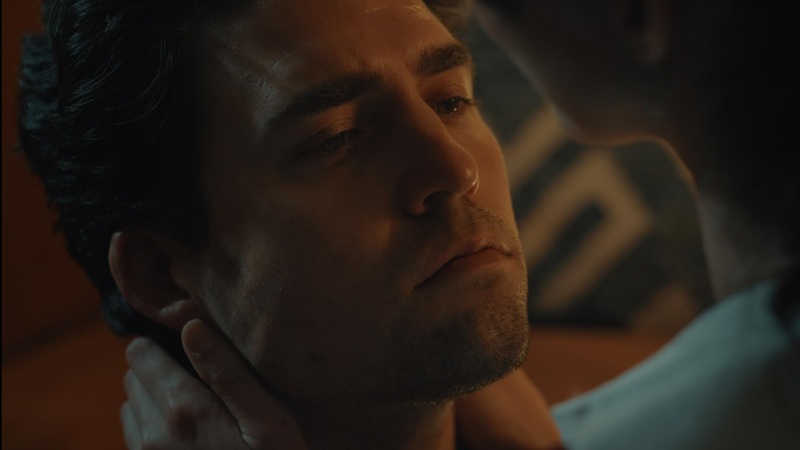
He attributes his rapid rise to the relentless discipline beaten into him by years of soccer conditioning and martial arts training. Wesley was raised in a household of artists and athletes, earning a 2nd-degree black belt in Tae-Kwon-Do, becoming a three-time National Champion and winning a Junior Olympics gold medal. His passion shifted to soccer, where he led both the nation’s 2nd-ranked club team and 7th-ranked high school team to numerous championships.
“The discipline that I’ve had as a musician, the discipline that I’ve had as an athlete, as a martial artist, it’s kind of shaped me to go, ‘Oh, I know how to get good at something.’ And in order to get good at this, you really have to put work in it… I had a brilliant mentor of mine that was a conditioning coach for me in martial arts… he would say, ‘No sacrifice, no glory.'”
“I Want It to Scare the Sh*t Out of Me”
That willingness to sacrifice has transformed Wesley into an terrifyingly uninhibited actor. He actively chases roles that demand total emotional nudity, citing transformative heavyweights like Christian Bale, Gary Oldman and Jeremy Strong as his North Stars.
He recalls a recent project where he had to channel his childhood night terrors for a horror sequence, tensing his body so intensely to simulate a demonic choking that he completely passed out on set. On his latest project, where he plays a “complete menace” of a drug dealer tracking down a pregnant woman in a hospital, his performance was so visceral that the crew refused to speak to him between takes.
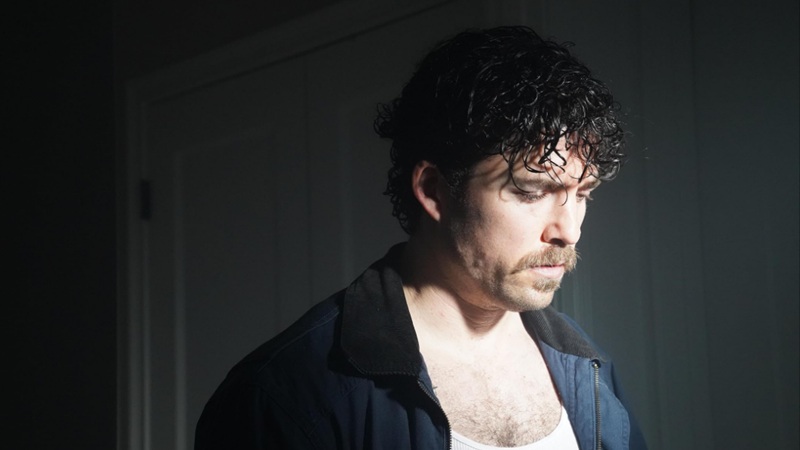
When Spling asked if there were any lines he wouldn’t cross, or any roles he would turn down flat out, Wesley’s response was immediate:
“No, I think I want it to scare the shit out of me. I think I want to be like, ‘Oh my God, am I going to ruin my career?’… I feel like roles that are challenging and that share a new light to who I am, a new vulnerability. That catharsis, I think that’s what I go towards.”
Today’s Metric
It’s easy to look at an actor who started their career later in life and wonder about the lost time. But as Spling pointed out during the interview, pointing to veteran South African actor Deon Lotz who didn’t start until his 40s, life experience is precisely what makes an actor authentic. “I don’t know if people can really become someone else until they really know who they are,” Spling observed.
Wesley doesn’t look back, and he refuses to look too far forward. He built his first empire in music, gave it away, and is now building his second – one frame, one audition, one gruelling emotional workout at a time.
“People go, ‘What’s your future look like?’ I’m like, ‘I don’t know. Like today, what am I putting in today? And then tomorrow it’s the same thing… Tomorrow is like, it’s not here yet. I gotta, I have so much to do today.”


