‘Nuisance Bear’ Movie Review – Is It Worth Watching?
🎬 At a Glance
- Directors: Gabriela Osio Vanden, Jack Weisman
- Cast: Mike Tunalaaq Gibbons
- Genre: Documentary
Spling’s One-Liner: “An experiential, immersive, gentle, soulful, sparse and thought-provoking nature documentary.”
Final Verdict: 8/10
Nuisance Bear is a striking and unconventional nature documentary set in Churchill, Manitoba – the polar bear capital of the world – and the nearby community of Arviat, Nunavut. Directed by Gabriela Osio Vanden and Jack Weisman, the film subverts interviews and voiceover in favour of a more hands-off approach. The film’s title stems from the wildlife management term for bears that have lost their fear of humans, though local Inuit elders parallel them to ‘avinnaarjuk (“sulky teenagers”) – young, unpredictable bears trying to find their place in a changing world.
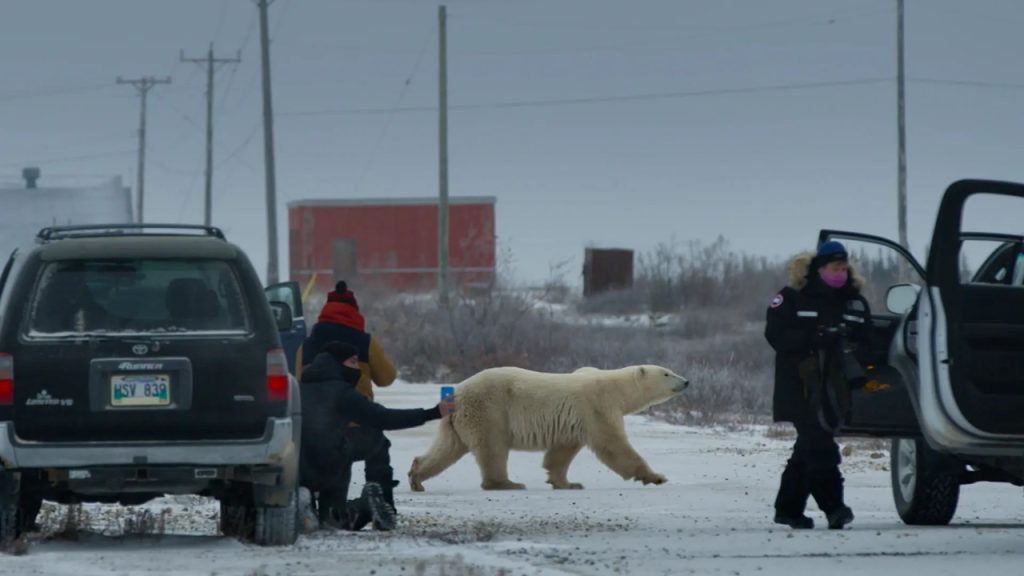
Closing in on these communities, the film deals with climate change in a remarkably gentle, observational way. It charts environmental shifts simply by witnessing the bears’ movements and behaviours. The documentary positions itself squarely in the tension between human civilization and the free-range spirit of nature. As enforcement officers and containment units are brought in to manage the animals, it becomes clear that there is increasingly less space for both to coexist harmoniously. Compounding this is a thriving tourism industry, drawing crowds eager to catch a glimpse of these creatures in their natural setting, even as keeping the town safe becomes a logistical maze.
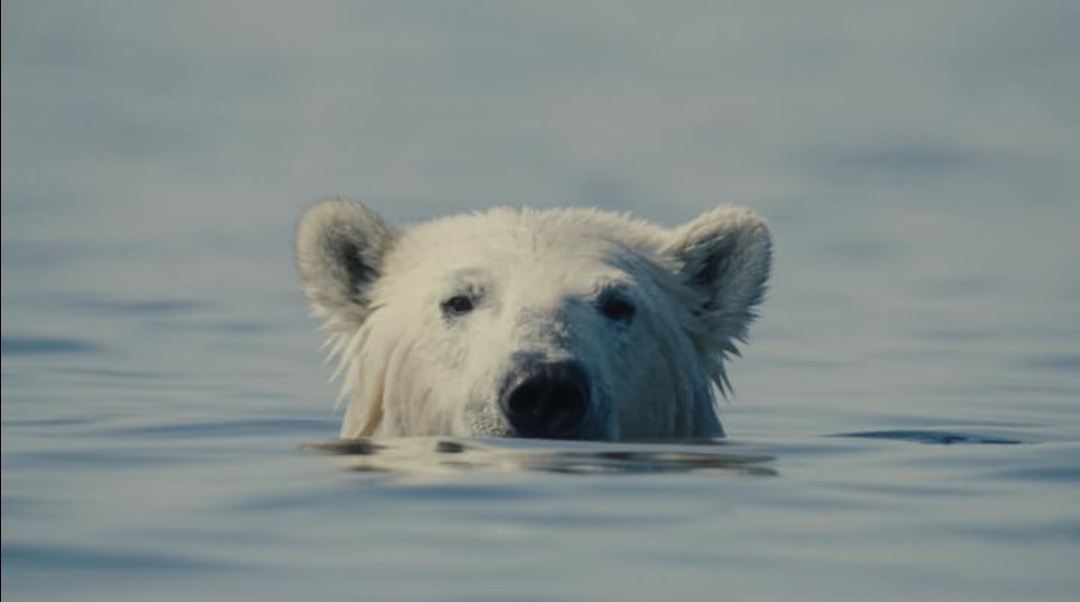
As dangerous wild animals, the bears are a constant presence for locals. Nuisance Bear views this reality from multiple perspectives. At first, we journey with a bear on its daily meanders, seeing just how close to civilization they live and how accessible recycling and dump sites are. We then see it from the tourist perspective, capturing the desire to see these majestic animals, which can create a false impression of abundance when they crowd near town.
Moving into the conservation perspective, the film highlights the methods employed to create a buffer between towns and wildlife reserves. Wildlife officers must remain constantly alert, utilising evasive and sometimes aggressive measures to safely relocate the bears.
Finally, the Inuit community and their sacred relationship with these beasts comes into focus. Aware of the dangers, the community contends with provincial authorities while employing their own localised methods of safety and monitoring. Narrated by Arviat elder Mike Tunalaaq Gibbons, this perspective provides a deeply respectful, ancestral viewpoint – touching on colonial legacy. Even when hunting bears in strictly controlled numbers for cultural subsistence and furs, utilising every piece of the animal, the community emphasises that the modern system is fundamentally out of balance.
“Why did the polar bear…”
It’s fascinating how this experiential documentary avoids mining raw data when it comes to pollution and climate change, choosing instead to simply show the visual reality of their effects. Watching the bears navigate this hybrid world is gripping; moving from aggressive to playful, they wander the frozen landscape looking for food, often finding trouble instead.
With an elemental soundtrack by Cristóbal Tapia de Veer and soulful, beautiful cinematography, the film expertly captures the essence of the Arctic landscape. Taking a strictly hands-off approach, the filmmakers provide a window into the situation rather than judging or condemning those caught within the system. While it is difficult for a film of this nature not to be political, the overall feel remains deeply objective – observing and reporting rather than manipulating the narrative. This structural tension perfectly mimics the ongoing issues of urban encroachment and animal displacement happening worldwide. Locally, one thinks of the baboon situation in Cape Town.
Nuisance Bear is a documentary that encourages viewers to completely immerse themselves. Sparsely scripted, it leans on elegant visuals and tone to make its impact without relying on a heavy-handed human perspective. By allowing the polar bears to function as the main characters, the issues become abundantly clear at an arm’s length. Gently persuasive, it tells its story through atmosphere and an on-the-ground feel, offering a fascinating cross-section of a community operating with the best intentions while struggling to find the right balance. Ultimately, Nuisance Bear is an exercise in restraint – the kind of film you may only fully appreciate once you’ve had the time to sit and process it.
The bottom line: Subtle