Ryan Wirick’s Transcendent Journey to the ‘Farmacy of Light’
Every filmmaker tracks their origin back to a single, crystallising snapshot in time. For documentarian Ryan Wirick, that genesis wasn’t found under the neon marquee of a classic cinema house, but rather on the sun-baked tarmac of Southern California.
In an illuminating conversation with Stephen “Spling” Aspeling, Wirick unpacks the unconventional evolution behind his latest feature documentary, Farmacy of Light. Co-written and produced with long-time creative partner Rob Herring, the film serves as a poetic yet scientifically rigorous follow-up to their acclaimed environmental feature, The Need to GROW.
Wirick’s journey is a fascinating study in character and perspective. It maps a circuitous, multi-decade loop from an awkward high school kid behind a lens to a deeply read academic, and finally, to a filmmaker capturing a modern-day Clint Eastwood on a regenerative parking lot farm.
From Skateboarding Misfit to Academic Seeker
Long before he was untangling the complex web of quantum biology on screen, Wirick was simply trying to find his footing within a rambunctious group of childhood friends.
“Growing up, I was basically the only kid at my high school who had a video camera,” Wirick recalls. “Everyone was skateboarding a lot. I skateboarded, too, but I wasn’t really good at it. So, I got kind of a longboard that had bigger wheels, and I’m like, ‘Well, maybe I could be the guy making skateboard videos and stuff.”
This shift – from active participant to hyper-observant documenter – laid the baseline for his lifelong storytelling instincts. What began as a way to tape adolescent pranks evolved into a passion for the mechanics of video editing, moving from tape-to-tape VHS cuts to structured short films screened at house parties. Yet, after enrolling in film school, Wirick hit a wall of self-aware humility. He realised he possessed the technical vocabulary of a storyteller, but lacked a deep understanding of the world he wanted to critique.
In a bold move, he dropped out of film school to pursue a rigorous path through higher academia. Wirick immersed himself in history, literature and philosophy, eventually earning a couple of master’s degrees. He became particularly fascinated by theoretical physicist David Bohm’s concept of the Implicate Order – the metaphysical and mathematical theory that reality is an undivided, fundamentally interconnected whole masquerading as a series of separate fragments.
When Wirick eventually returned to media via local journalism in Laguna Beach, his academic lens had permanently altered his approach to the camera. He fell in love with the raw, intimate psychology of the interview space, recognising it as a unique container where purposeful dialogue forces people to voice truths they might otherwise leave buried in daily life.
The Clint Eastwood of Farming
The thematic bridge connecting Wirick’s academic obsession with universal interconnectedness and physical reality turned out to be remarkably simple: food. This philosophy brought him to Erik Cutter, a brilliant, uncompromising urban farmer who stands at the absolute emotional centre of Farmacy of Light. Wirick had first crossed paths with Erik in late 2013 while scouting for The Need to GROW, instantly recognising a rare cinematic presence.
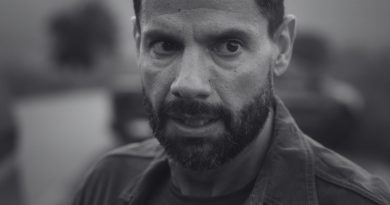
“This guy is clearly brilliant, so driven, funny at times, intense, kind of a hard-ass,” Wirick notes. “He’s like this Clint Eastwood of farming type vibe… I was like, ‘Ah, well, he could carry a film.'”
Where The Need to GROW focused heavily on the structural and ecological universe of soil, Erik was constantly pulling the conversation toward an entirely different frontier: light, energetics and cellular frequencies. He watched his crops undergo massive, unexpected explosions of nutrient density and genetic expression, reasoning that something far more fundamental than textbook chemical reactions was driving the biology under his feet.
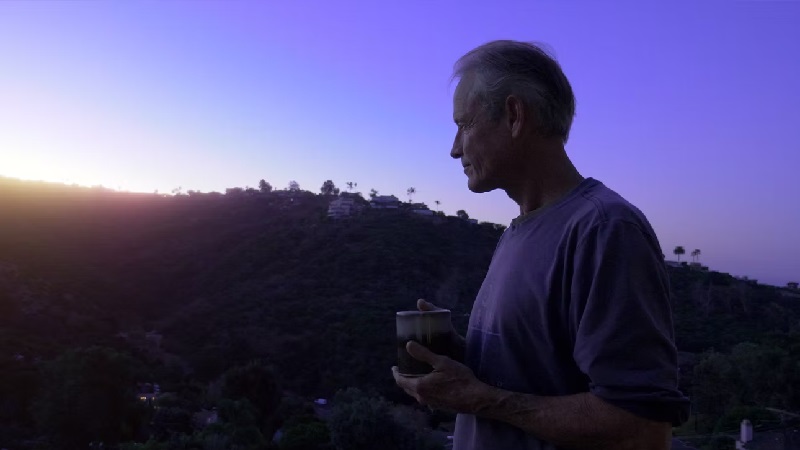
In Farmacy of Light, Wirick utilises Erik as a gritty, hands-on visual anchor to ground an incredibly abstract topic. Erik is a fascinating subversion of the stereotypical farmer archetype; he’s an older, weathered man processing his own legacy and relationship with generational time, yet he speaks fluently in the complex dialect of biochemistry and energetic systems. By spending years filming him, Wirick captures a profound vulnerability, showing a stoic, guarded caregiver wrestling with the immense weight of keeping a farm alive during moments of global upheaval.
Evangeline Lilly and the Ethereal Narrative Thread
Documentaries tracking dense scientific frontiers often struggle with their “connective tissue” – the crucial pacing elements that translate raw data into an engaging narrative arc. To elevate Farmacy of Light beyond a standard talking-head science lecture, Wirick and his co-writer Rob Herring required a voice capable of straddling both the earthy dirt of the farm and the poetic expanse of quantum biology.
Watch Farmacy of Light for FREE
They found that rare alchemy in Marvel and Lost alumnus Evangeline Lilly, who stepped into the project as both narrator and executive producer. The collaboration was a creative leap of faith. Lilly was quietly navigating her own personal health and healing journey away from the Hollywood limelight when Wirick’s team reached out. The material resonated instantly.
Rather than executing a standard, detached voiceover session, Lilly became deeply invested in the structural integrity of the narrative tissue. She brought precise, sharp insights into how the information unfolded, working collaboratively to adjust pacing and grammatical flow on the fly.
Her performance gives the documentary its distinctive, split-level atmosphere. Lilly’s voice transitions effortlessly from a grounded, matter-of-fact delivery during sections on municipal food deserts to a beautifully poetic, almost ambient cadence when delivering lines written from the literal perspective of light itself.
Subverting the Chaos of 2020
The ultimate test of Wirick’s filmmaking instincts arrived when the production collided head-on with the COVID-19 pandemic. Initially envisioned as a modest, hyper-local short documentary based just an eight-minute drive from Wirick’s front door, the film was forced to pivot dramatically as societal lockdowns fractured the globe.
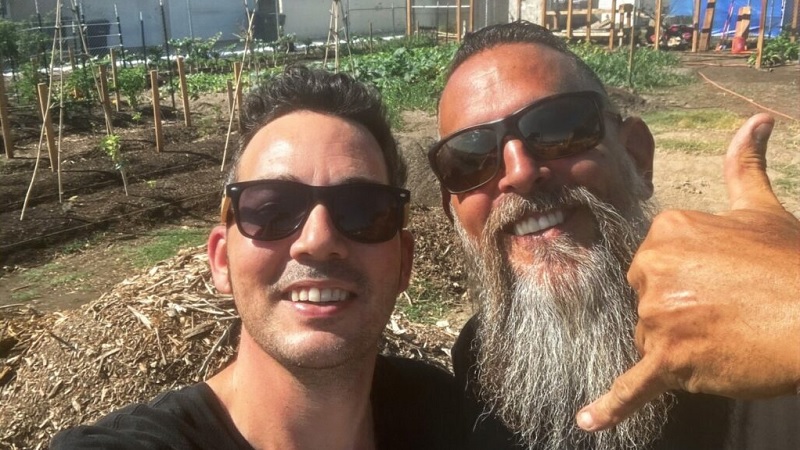
Yet, true to the permaculture philosophy of “access by proximity,” Wirick leaned directly into the limitation. He watched Eric’s team transform a moment of absolute structural panic into a model of localised resilience, partnering directly with local food banks to supply fresh, untainted produce to vulnerable communities from a farm built entirely over a tar parking lot.
During the dark, isolated peak of editing, Rob sent Wirick a historical illustration of Isaac Newton tracking the spectrum of light through prisms while isolating in the countryside during the Great Plague of London. It became a beautiful, running joke that perfectly encapsulated the spirit of the project. While the outside world spun out into hyper-fixated anxiety and division, Wirick remained fiercely locked inside an artistic container, piecing together a cinematic love letter to human health, humility and hope.
Farmacy of Light stands as a definitive testament to Wirick’s evolutionary path as a filmmaker. By merging his early run-and-gun storytelling instincts with the rigorous demands of data transparency and philosophical inquiry, he has crafted a piece of non-fiction cinema that doesn’t just ask us to look at the food on our plates – it asks us to fundamentally rethink our place within a living, breathing universe.