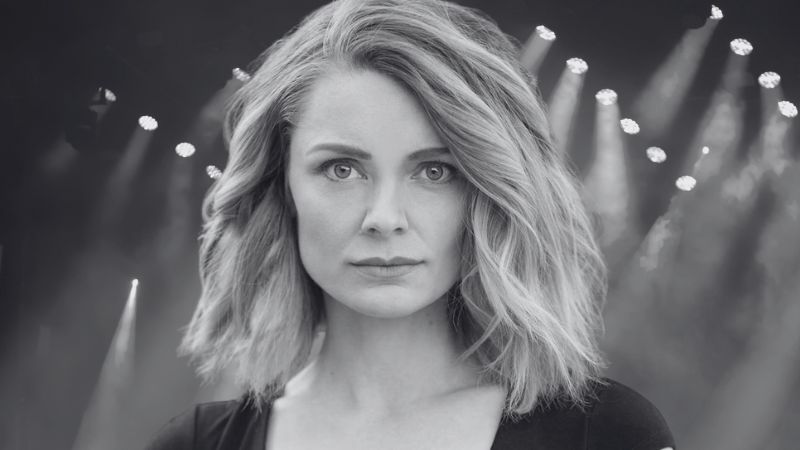
Angelique Pretorius on Acting, Archetypes and Accents
The journey of an actor is often viewed through the finished product – the polished performance on screen. But for South African-born, Los Angeles-based actress and filmmaker Angelique Pretorius, the craft is a complex navigation of cultural codes, linguistic gymnastics and the brave transition from being a “foreigner” to a creator.
In a recent deep-dive interview with Spling, Pretorius opened up about the “culture shock” of Hollywood, the technical precision of American sitcoms and why healing her personal trauma actually made her a better actress.
The L.A. Learning Curve: Beyond the “Entertainment Filter”
Moving from the South African film industry to the heart of Hollywood isn’t just a change in geography; it’s a change in frequency. Pretorius recalls the initial struggle of “thinking faster” to keep up with an industry where pop culture references are the primary currency.
“People’s minds work super fast in LA… you can sit at a bar and listen to people talk and they’re just spewing facts and names like it’s no one’s business,” she notes.
The real challenge, however, wasn’t just the pace – it was the alien feeling of not being fully versed in the American zeitgeist. While South Africans grew up with Vodacom’s ‘Yebo Gogo’ or “end-of-the-month Salticrax” catchphrases, her American peers were referencing ‘Be Like Mike’ or ‘Got Milk’. The TV shows that were formative in her youth were ‘Mina Moo’ and ‘Orkney Snork Nie’ as opposed to ‘Mister Rogers’ and ‘Happy Days. This gap in shared history and pop culture makes the “Actor’s Craft” more than just learning lines; it’s about learning a new cultural DNA.
Decoding Archetypes: The “Poppie” vs. The “Valley Girl”
One of the most fascinating aspects of Angelique’s transition is her deconstruction of characters. Acting is about tapping into universal truths, but those truths are often draped in local flavours.
Pretorius illustrates this through two similar, but different archetypes:
The South African “Poppie”: an Afrikaans, dolled-up, ditzy, excessively feminine social butterfly, who speaks in a high-pitched voice.
The American “Valley Girl”: Originating from Southern California, she is trendy, vapid, shopping-obsessed and speaks in a dramatic vocal style that includes uptalking (sentences ending on a higher pitch).
Angelique’s ability to ground the “Poppie” character in the truth stems from her real-life interactions with
versions of that type of person. Now that she’s immersed herself in Los Angeles, she’s become better acquainted with the “Valley Girl” type, giving her the exposure and research necessary to inhabit this character.
That said, comedy is very stylised. In order to master the American style of comedy, Pretorius sought out experts like Leslie Kahn, the “queen” of sitcom comedy training, to learn the technical precision of humour.
The Mechanics of the Sitcom
American comedy relies on specific techniques that differ from the more theatrical or understated styles found elsewhere.
The Reversal: A sudden switch in delivery or emotion (e.g., “I’m so happy. Not.”).
The Rule of Three: A comedic structure where two ideas establish a pattern and the third subverts it.
Energy Maintenance: Never dropping the “voice” or energy at the end of a line, ensuring the punchline lands with maximum impact.
Accents as a “Superpower”
For many international actors, the accent is a barrier. For Pretorius, when she first arrived in LA, it was used as a “party trick” at in-person auditions (a rarity since COVID). Her strategy? Enter the audition room as a “quintessential American,” do the scene, and then – once the casting directors are hopefully convinced – switch back to her South African roots.
“I didn’t want to draw attention to the fact that I’m not American during my auditions,” she explains. “But switching once I was done… they would often be quite impressed.”
She notes that the South African English accent is still finding its “common acceptance” in Hollywood, unlike the “beloved” British accent. However, the physical act of switching accents changes more than just sound; it changes posture. “The South African accent is spoken with a tighter jaw and the sound is placed quite forward in the mouth, creating a more reserved energy. Whereas the American accent is spoken with a loose jaw and raised soft palate, which feels fuller and rounder, allowing the actor to energetically take up more room.”
The Evolution: From Pain to Power
Perhaps the most profound shift in Angelique’s craft is her approach to emotional depth. Early in her career, like many trained in the Stanislavski method using “emotional memory”, she would go all out to “re-live” past experiences for her emotions to be authentic in a scene.
“When I was younger, I didn’t want to actually heal all of my wounds because I had this idea that I needed to have something to draw from when I act.”
Today, Pretorius has a different perspective. She says, “During a group audition for the Leslie Kahn course I saw her turn a potential student away. The reason she gave was that this person needed to first get therapy in order to become emotionally available. That his emotional defences were not allowing him to fully surrender to the role. This was quite a revelation to me. That being emotionally healed is actually a strength when it comes to acting.”
Today, Pretorius views the “emotional muscle” as something that can be exercised without needing to re-traumatize oneself. She can now access authentic impulses through craft and imagination rather than personal suffering – a healthier, more sustainable way to approach the “leading lady” roles she often inhabits.
The New Frontier: Directing and AI Thrillers
Angelique is now stepping behind the lens, embracing the roles of writer, producer and director. While she admits producing is her “least favourite hat” (likening it to high-stakes project management), she has found a deep love for the “puzzle” of editing.
Her current “big swing”? A script for an AI rom-com thriller. A story with romance, humor, suspense and action set in a futuristic (or maybe not so futuristic) world.
Whether she’s playing a lead role in a twisty thriller like Mind Thief or directing her own short films, Angelique Pretorius remains a testament to the versatility required in the modern industry. She’s no longer a foreigner on Sunset Boulevard; she is an Angelino filmmaker with a South African soul.