
‘My Father’s Shadow’ Movie Review – Is It Worth Watching?
🎬 At a Glance
- Director: Akinola Davies Jr.
- Screenplay: Akinola Davies Jr., Wale Davies
- Cast: Ṣọpẹ́ Dìrísù, Godwin Chiemerie Egbo, Chibuike Marvellous Egbo
- Genre: Coming-of-Age Period Drama
Spling’s One-Liner: “A richly textured, poetic, and immersive period drama that tenderly balances boyhood innocence against the slow-creeping political unrest of 1990s Lagos.”
Final Verdict: 7/10
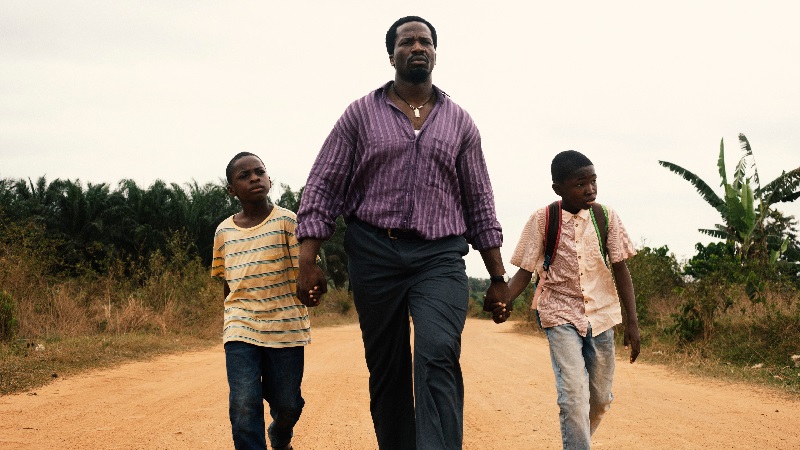
My Father’s Shadow, directed by Akinola Davies Jr., is a semi-biographical coming-of-age drama set in Nigeria that journeys alongside two young brothers, Akin and Remi, and their distant father, Folarin, as they make a day trip into Lagos to reconnect and claim months of overdue wages.
Struggling with a bus that runs out of fuel, the trio wind their way into the city only to find that the boss is unavailable until nightfall. This detour leads them onto the bustling streets, introducing the wide-eyed boys to the urban sprawl of Lagos through street food vendors, an amusement park and the beach.
Starting from a rural home where the children play with paper cut-outs of their favourite WWF wrestlers, this is a vivid, colourful drama that immerses the audience with the tactile immediacy of a docudrama. Set in the 1990s, it captures the spirit of the era – uncluttered by mobile phones and reliant on face-to-face encounters over digital connectivity, grounding the story in a distinct period of history.
Set against the backdrop of the pivotal 1993 Nigerian elections, a slow-boiling tension creeps into the frame as the day-in-the-life narrative charts the restless anticipation of the election results. Looming beneath the surface of military authority and civil unrest, the story speaks directly to the regime of the time, where armed force was the order of the day.
At its core, earning an honest wage and supporting one’s family remains vital. The boys hero-worship Folarin, who guides and entertains them while navigating encounters with various inner-city characters and gatekeepers.
The film is handsomely shot, radiating warmth, nostalgia and a lived-in aesthetic. It captures the spirit of its subjects by keeping the focus squarely on human connection, frequently filling the frame with expressive close-ups.
There is an honesty, authenticity, and understated charm running throughout My Father’s Shadow, counterbalanced by a poignant undercurrent of grief and vulnerability. Working with non-professional youth brings an easygoing, naturalistic rhythm to the screen and Davies keeps the young performers grounded in the moment as they navigate the chaotic shift from rural tranquility to urban density.
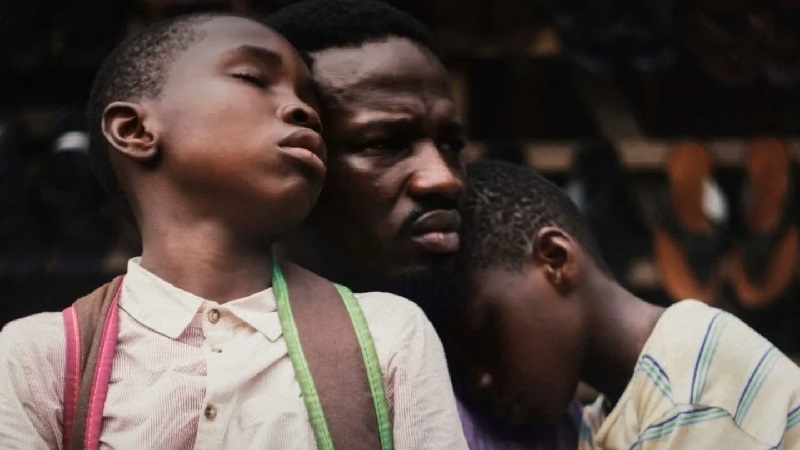
“Not long now my boys.”
Ṣọpẹ́ Dìrísù is exceptional as Folarin, delivering a commanding, emotionally resonant performance that anchors the entire piece. As the story’s backbone, Dìrísù brings a quiet dignity, fatherly concern and resolve that propels the narrative forward. Real-life brothers Godwin Chiemerie Egbo and Chibuike Marvellous Egbo complement him with effortless chemistry and endearing turns.
The visual style and atmospheric texture breathe life into the picture, while the authentic sense of place grounds the drama. My Father’s Shadow also operates with a subtle thematic shift that becomes clearer as the day wears on, rewarding attentive viewing with understated cues that enrich the final emotional payoff.
While its central ideas remain implied rather than overtly explained, the vibrant colour palette and delicate emotional undertones keep the drama engaging. Filtered through the innocent, tender gaze of the two young brothers, the brewing political unrest surrounding the elections becomes all the more palpable.
Grappling with historical memory and civil tension, the film elevates a deceptively simple, pedestrian journey with immense heart. Rather than leaning on manufactured spectacle, it unfurls at an organic pace, inviting viewers along for the ride as the day in the city runs its course. While reminiscent of Goodbye Julia in its atmospheric and tense historical setting and everyday focus, it has the intimate and moody visual poetry of Moonlight.
While modest budgetary constraints occasionally show and a few secondary beats feel slightly loose, the film is carried by Dìrísù’s commanding lead performance, docudrama authenticity and a creeping tension that reframes the entire journey. Entertaining, poetic and richly textured, the cinematography immerses the viewer in the gentle ebb and flow of a fateful day trip across Lagos.
The bottom line: Vivid


