
Movie Review: No Other Choice
Screened at Stockholm International Film Festival 2025
One-liner: An entertaining, insightful, thoughtful, timely and well-crafted dark comedy crime drama.
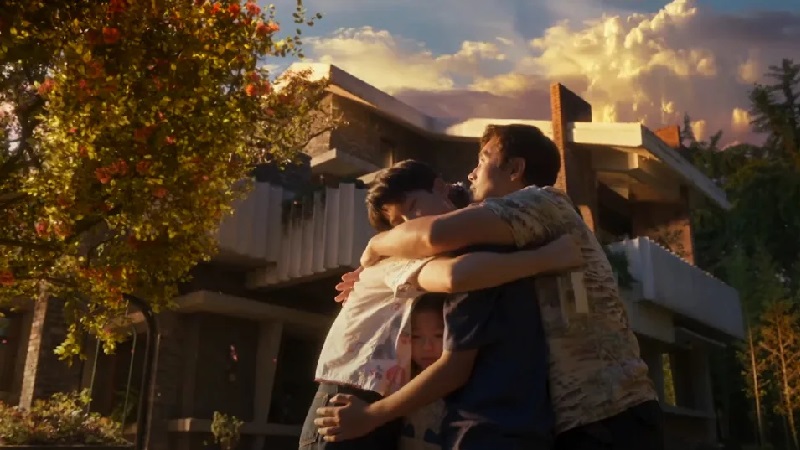
No Other Choice is an innovative, darkly comical, and wildly entertaining crime caper from Park Chan-wook. The film centres on a family man whose home life seems idyllic; he has paid his dues and effectively worked his way into a life of comfort and privilege. Now a veteran employee of 25 years, his buffer of safety is suddenly ripped out from under him as company retrenchments reveal just how dependent his family is on his once-reliable career.
Having built his identity on this steadfast job, his pride takes a hit. He scrambles to make ends meet, accepting positions far below his usual standing. Having lost his ‘dream existence’ and fallen from a position of power, his desperation to reclaim what was lost is palpable as downsizing happens across the board. When a lucrative job at a new paper merchant becomes available, he becomes clinical in his assessment of the competition, willing to do whatever it takes to land the prized role.
This dark comedy takes several timely themes and intertwines them to create something surreal, yet reflective of our ‘downsizing’ society. Corporate greed, financial crises, the threat of automation, and a general sense of disillusionment all hover over Park Chan-wook’s latest caper.
In some ways, No Other Choice feels inspired by Parasite, delivering a work of artistic merit without losing sight of its intrinsic entertainment value. It’s a film that operates as both a refined piece of entertainment and a sharp social commentary, ticking every box in its curious tale of a man who would do anything to get back on top.
Taking the lead role on Man-su is Lee Byung-hun, who does a remarkable job of remaining an ‘everyman’ while staying in his lane – never quite trying to charm the audience. Through Park Chan-wook’s inspired direction, the film crafts an intense narrative as we journey with a man pushed to extremes. Much like Falling Down, we understand the pressures even as we accept the deliriousness of his intended solution.
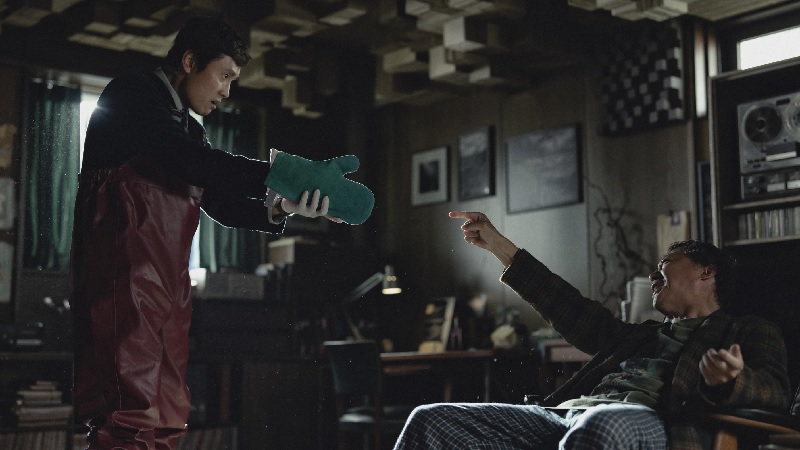
“Squeaky clean, you won’t even know I was here.”
Chan-wook swathes us in a dreamlike tale with enough poetic license to get away with anything -from the protagonist’s desperate ‘hit list’ to comical scenarios where nothing goes to plan. These wickedly funny moments add colour to an already suspenseful film, which moves at a brisk pace and deepens our involvement with the lead. While it prioritises immersion over preachiness, there is still significant political weight to the underbelly of No Other Choice.
The film speaks to our dog-eat-dog world, where people are seen as dispensable and money equals power. The subtle social commentary is layered, eventually ending on a haunting note that circles back to the paper merchant and our treatment of the environment.
Park Chan-wook has delivered a red-blooded, dark comedy caper that keeps the viewer transfixed. He makes astute observations without devolving into a ‘message movie’. Instead, No Other Choice keeps the audience on edge, maintaining a sense of novelty and wonder without ever feeling repetitive.
The film also showcases truly unique creative moments in terms of cinematography and narrative forethought. If No Other Choice struggles at all, it is only in its overall efficacy; at times, it feels as though it isn’t quite as funny or as suspenseful as it aims to be. Similarly, Lee Byung-hun’s understated performance has a humility to it that, while effective, occasionally blunts the film’s full impact.
Ultimately, No Other Choice is an excellent film that operates with ruthless efficiency in every sense. With fresh material, a compelling story and sharp performances, it’s a highly recommended watch. If you loved Parasite, there’s much to appreciate in this beautifully crafted, well-poised and pleasing film.
The bottom line: Ruthless


