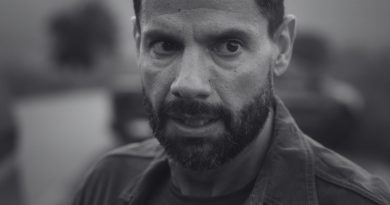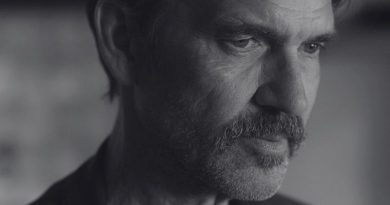
Devon Delmar and Jason Jacobs on ‘Variations on a Theme’
It is rare to encounter a film that feels both like a mathematical precision piece and a deeply breathing, organic lung of South African history. Spling sat down to discuss Variations on a Theme with filmmakers, Devon Delmar and Jason Jacobs, fresh off their historic Tiger Award win at Rotterdam. The conversation could have leaned into the mechanics of “slow cinema” but ventured into the profound meditation on grief, the colonial legacy of Namaqualand and the radical act of waiting.
Rooted in the harsh reality of modern-day grant exploitation in the Northern Cape, Variations on a Theme serves as a “gentle resistance” against the erasure of the elderly. The conversation touches on how they turned what started as a spreadsheet-based screenplay into a haunting cinematic artwork.
A Narrative Built on Structural Precision
While many filmmakers start with a traditional script, Devon Delmar and Jason Jacobs took a more rhythmic, almost architectural approach. They utilised a musical framework to mirror the cycles of life in Kharkams.
“We wrote the film on Microsoft Excel as a series of stories playing out across five days… The film unfolds according to a repeating visual structure inspired by the musical compositional form Variations of a Theme, the most famous of which is Bach’s The Goldberg Variations.”
By using 30 fixed frames per day that move in a circular shape, the film captures the “waiting” that defines the lives of those seeking WWII reparations. It’s an innovative translation of music theory into narrative cinema – where the “theme” is the setting, and the “variations” are the subtle shifts in light, movement and human gesture.
The Choice of “Stoic Resilience”
The film’s protagonist, Ouma Hettie, remains silent throughout. It’s a risky creative choice that pays off by forcing the audience to sit in the character’s internal space rather than consuming her words as exposition.
“Making her speak actual lines did not feel right. In a way, she represents the feeling of being tired of speaking. She also sits in her grief instead of running away from it… we chose narration (prose) to fill in the stoic nature of her performance.”
This silence isn’t an absence; it’s a presence. By using poetic voice-over as a bridge, the filmmakers allow the audience a “softer gaze” into a world usually defined by the “economic and emotional wreckage” of colonial history.
Landscapes of the Mind: The Aspect Ratio
One of the most striking technical choices is the use of an expansive wide-screen frame for what is essentially a small, intimate story. Usually, intimate dramas lean into a narrow 4:3 ratio (as seen in their previous work, Carissa), but Variations of a Theme flips the script.
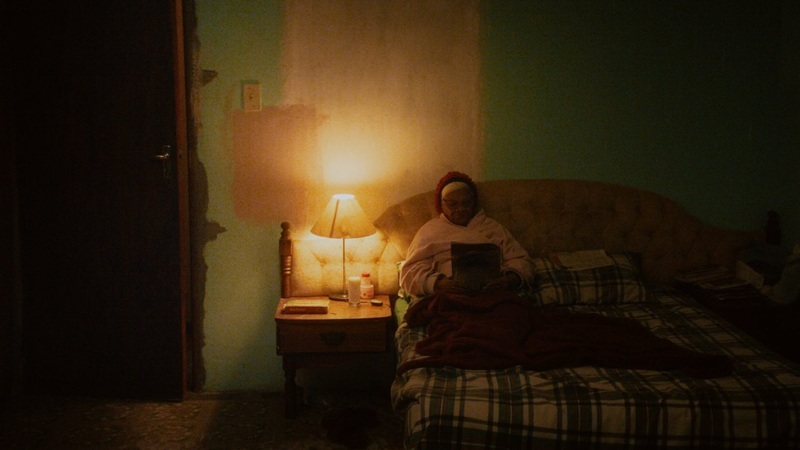
Delmar and Jacobs utilise a sophisticated visual symbolism through framing that intentionally juxtaposes the individual against the infinite. By positioning Ouma Hettie as a solitary, diminutive figure within an expansive anamorphic frame, they effectively externalize the “infinite weight of her waiting”, making her patience feel as vast as the landscape itself.
This choice serves as a mirror of nature, where wide shots of the domestic kitchen and donkeys in a kraal reflect a stoic, unchanging world that resists the rush of modern life. Ultimately, this use of wide-angle cinematography suggests a profound internal vastness, signalling that Hettie’s inner world is as weathered, expansive and enduring as the very shots captured on screen.
Directing Lineage and Legacy
The casting of Hettie – Jason’s own grandmother – wasn’t a matter of convenience; it was a creative necessity. The film blurs the line between documentary and fiction, with community members playing versions of themselves.
“Because the community knew Jason, there was a baseline of trust that allowed them to avail themselves and offer authentic representation that cannot always be scripted… The story came from her obsession to be respected by our government in the form of acknowledgement and reparations.”
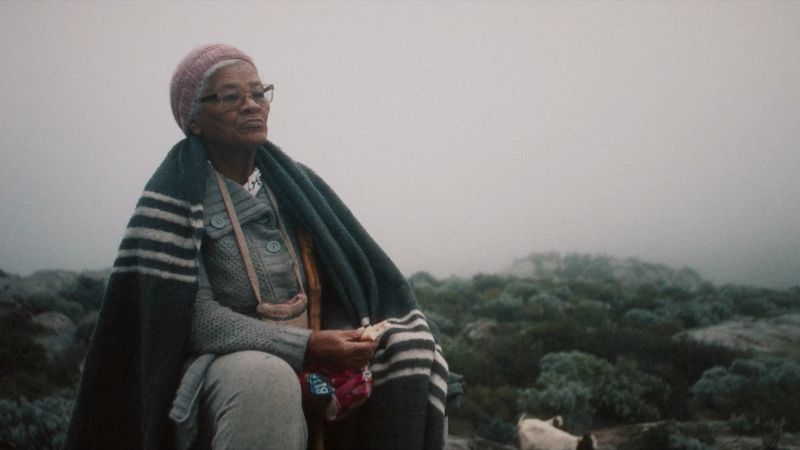
This authenticity anchors the film’s haunting and sophisticated score by Mikhaila Smith, which, like the visuals, undergoes five variations across the story’s duration to mimic the emotional peaks and troughs of the narrative.
A New Chapter for South African Arthouse
The Tiger Award at Rotterdam is more than just a trophy; it’s a validation of independent South African cinema on the global stage. But for the filmmakers, the true success lies in the Northern Cape.
“We hope the film will be received with pride and gentle resistance… The film leans into a slow cinema tradition and challenges fast-paced, high-drama consumption and asks audiences to sit in their stillness.”
Variations on a Theme carries with it the dust of Kharkams and the “rhythmic stillness” of Namaqualand. It is a reminder that some of our most powerful stories aren’t found in the noise of the city, but in the quiet, persistent waiting of our elders.
An Independent Film with a Global Ripple
Delmar and Jacobs have crafted a small film, which much like its format, has an expansive effect. They want Variations of a Theme to “open doors for generations of independent filmmakers to come” and trust that funding bodies like the NFVF “keep recognising the value of supporting local independent cinema”.
South Africa’s local film industry needs all the support it can get and Variations on a Theme encourages filmmakers, producers and creatives to “discover what small communities have to offer: new talent, authentic stories and real opportunities to grow and employ people across our industry”.