Meg Rickards on Gritty Realism, Cock-Socks and Guerrilla Streaking
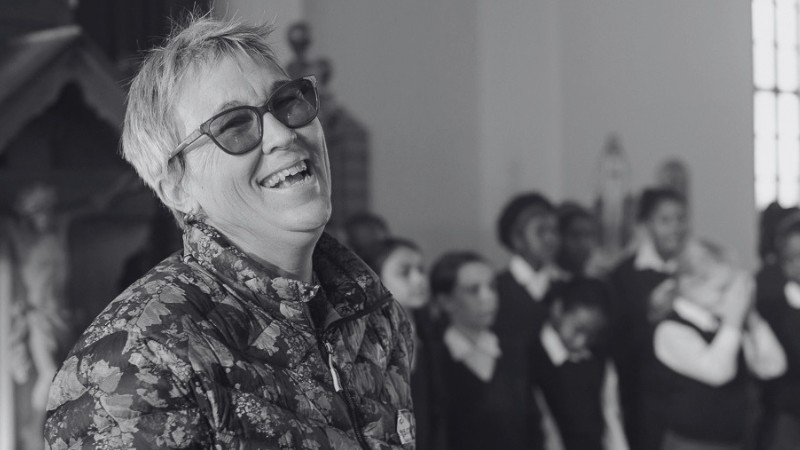
There’s a distinct brand of creative restlessness that separates mere directors from true visual storytellers. For South African filmmaker Meg Rickards, this manifest force is an absolute necessity. “I get very depressed if I can’t be creative, if I don’t have an outlet,” she admits. It is this exact drive that has shaped one of the most wonderfully unpredictable filmographies in contemporary local cinema.
To look at Rickards’ body of work is to witness a creative shape-shifter at work. She’s the directorial force behind Tess, a devastatingly raw, hard-hitting social realist drama about a Cape Town sex worker confronting a traumatised past. Yet, just a few years later, she pivoted entirely to helm Kaalgat Karel, a delightfully absurd, light-hearted romantic comedy about an incorrigible serial streaker.
Spling sat down with Rickards to unpack this extreme stylistic pendulum swing, the psychological shifts required to jump between genres, and the sheer logistical madness of shooting guerrilla comedy on the streets of East London.
Shifting the Psychological Lens
Jumping from the heavy, activist-driven atmosphere of a film like Tess to a mainstream comedy requires a total recalibration of a director’s psychological approach on set. For Rickards, Tess was a profound labour of love aimed at addressing gender-based violence, but it took a significant emotional toll on everyone involved.
When her husband and long-term producer, Paul Egan, first pitched a comedy script on the heels of that intense experience, Rickards was initially highly resistant.
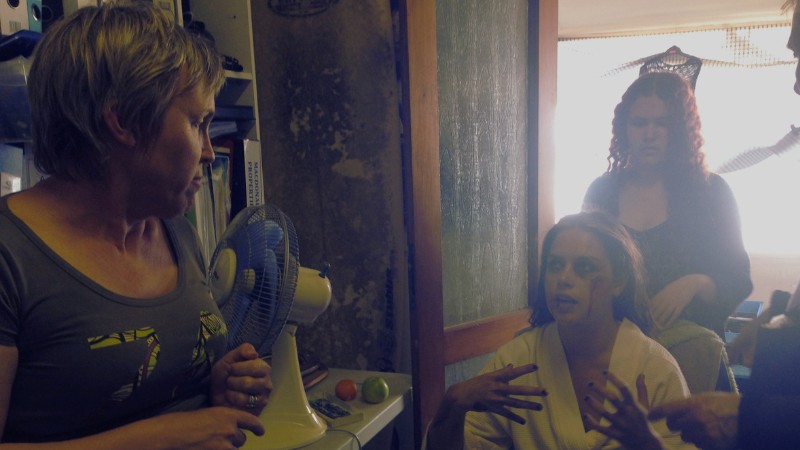
“My dad had died, and I just was not feeling it at all. Paul sent me the document to look at… and I found I was really enjoying it, and the playful and naughty humour. By the end of that session, I said, ‘Okay, I’ll do the draft with you.’ I was resistant to the end, I had to be dragged kicking into that project, but actually I loved doing it. It was really liberating, because I just didn’t feel this weight of needing to communicate something important. I just wanted to make something that would make people laugh.”
This shift in narrative weight fundamentally transformed the daily energy on set. While Tess required a deeply protective, fragile environment for the cast, Kaalgat Karel became an exercise in creative freedom. “The psychological approach was so different,” Rickards notes. “It was all about play, and just having fun and taking risks. It was an extremely playful and light-hearted feeling on set.”
Managing the Madness: Sacks, Socks and Bowling Greens
Directing a feature film about a man who refuses to wear clothes introduces an entirely unique set of logistical hurdles. Because the production could not feature full-on frontal nudity, Rickards had to get incredibly resourceful while shooting fast-paced, practical sequences in public spaces.
“We couldn’t have full-on frontal nudity, so I came up with this idea that the guys would wear like different puppets. We had all these different cock-socks in a sack! We crashed an old people’s bowling game – we did tell the organisers, but we didn’t tell the actual players. They loved it, they were so excited! The best part for me was when someone shouted, “Hey, it’s Kaalgat Karel!” because it was all over the news in East London, because nothing ever gets filmed there.”
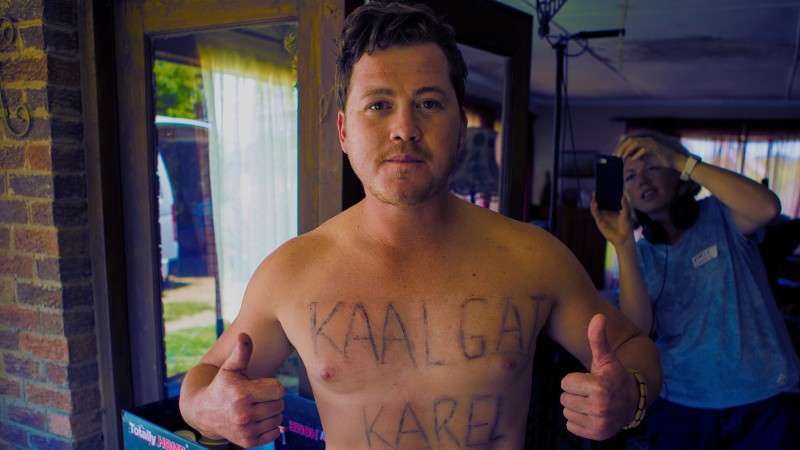
Leading man Francois Jacobs proved to be the ultimate energetic match for the film’s cheeky, chaotic spirit. Rickards recalls that Jacobs completely embraced the persona. Yet, true to her observant directorial eye, she reveals that his effortless comedic charm was anchored by a deadly serious work ethic. The film co-stars Schalk Bezuidenhout as Karel’s sidekick, Flip. A stand-up and household name in South Africa, “he operates that persona a lot of the time, but he’s actually quite reserved in his normal personality. He works very hard, he’s very analytical and very deep thinking. Both guys frequently ad-libbed lines that made it into the final cut.”
When Guerrilla Filmmaking Gets Real
While comedy sets are generally filled with laughter, operating in real-world environments without the controlled bubble of a Hollywood budget can occasionally lead to genuine danger. During the tail-end of the Kaalgat Karel shoot, the production attempted to film a high-stakes sequence at a major, live boxing match in East London, featuring an appearance from Siv Ngesi, who plays a rival streaker in the film.
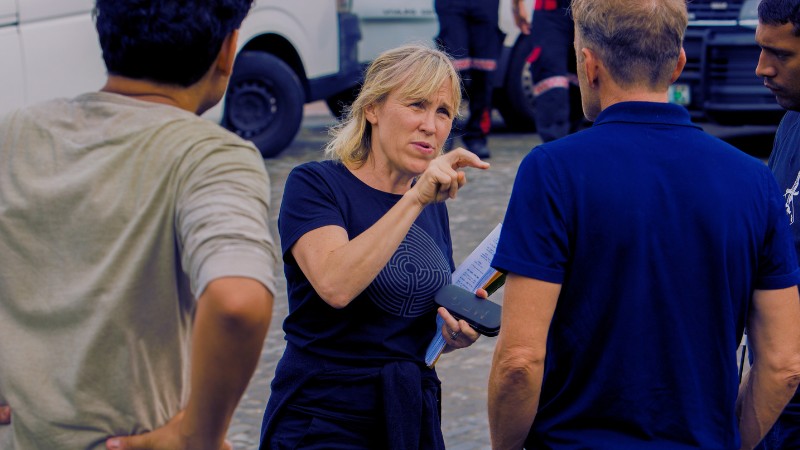
“Siv was going to go into the boxing. We had this permission, and it was all set up, and he ran on in his thong and took off his gown and paraded. Most of the crowd loved it, but there were some publicists… they were really angry. They felt this was very disrespectful to the culture. And they attacked Paul, the producer, and also our cinematographer Bert, and actually took his camera off him. It was quite violent. I have never had to negotiate harder… They said, ‘There are children in the audience, and you’re going to traumatise them,’ and I thought, a guy in a thong is going to traumatise them, but boxing isn’t? Seeing people bashing each other’s brains out?”
After a tense, two-hour negotiation with very tough characters, the team successfully recovered the camera and the footage, though Egan and DOP Bert Haitsma sustained injuries that lasted for weeks. It was a stark reminder of the volatile spaces independent filmmakers must navigate to capture authentic energy.
The Demographics of South African Storytelling
Ultimately, Rickards’ willingness to switch artistic skins has allowed her to connect with vastly different corners of the South African audience. She has observed a fascinating demographic divide in how her films are received across the country.
White Afrikaans audiences have deeply embraced the cult, re-watchable charm of Kaalgat Karel, often expressing shock that a middle-class English woman was the creative force behind it. Conversely, her gritty, neo-noir adaptation of Atlantis found an immense, passionate following among working-class and Coloured communities. Meanwhile, Tess continues to serve as a profound touchstone for women navigating survival and healing.
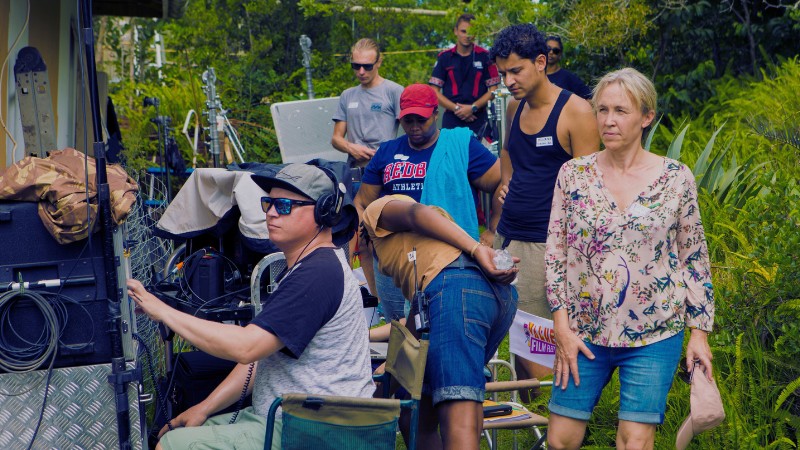
This cross-cultural resonance is precisely what Meg Rickards aims for, and she is weary of the hyper-segmented, formulaic trends of modern streaming platforms.
“I would love to make something that could appeal to South Africans across the board. I don’t want to make a Leon Schuster film, but I love the fact that he could appeal to a broad base… something that we can all laugh at. I will always come back to adaptation because I love it, and I think we have a rich font of stories.”