Dougray Scott on Character, Chaos and Craft
There is an unmistakable gravity to Dougray Scott. Across a career spanning four decades – taking in cult British classics, atmospheric thrillers, and prestige television – the Scottish actor has consistently brought an earthy, muscular integrity to the screen. That textured screen presence takes centre stage once again in Invisible, the high-octane television series adapted from master crime novelist Deon Meyer’s bestselling thriller ‘Blood Safari’.
Stepping into the shadowy shoes of Quintus, the series’ formidable antagonist, Scott delivers a masterclass in calculated villainy, capturing the moral ambiguity and lethal sophistication that define Meyer’s high-stakes world. Yet, when you engage him on the mechanics of his craft, what emerges is not the brooding austerity of his on-screen personas, but the quiet, considered perspective of an artist who views human contradiction as his artistic palette.
Sitting down with Scott to unpick the architecture of his performances at the 12 Apostles Hotel in Camps Bay, the conversation immediately turns to the crucial initial encounter with a screenplay. How does an actor of his range identify the specific key that turns the lock of a new character?
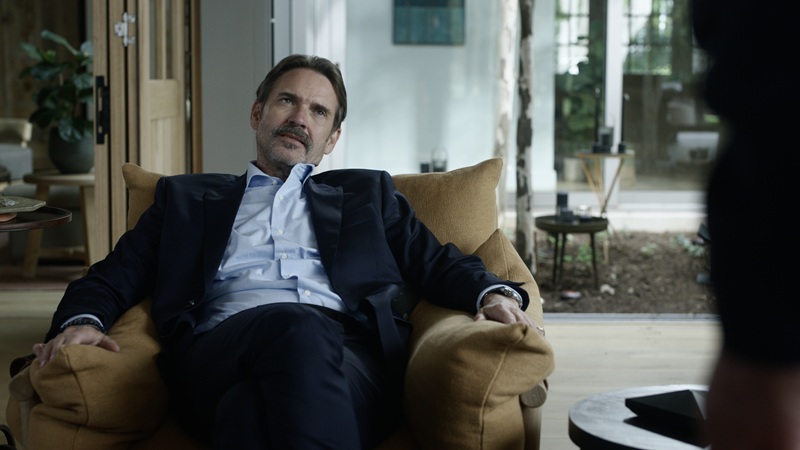
“I have initial impressions,” Scott explains with an easy laugh. “I read it and I go: do I like the subject? Do I like the story? Is it plausible? Is the character someone that I feel attracted to playing? And then I take it from there.”
The Anatomy of Antagonism
For Scott, that threshold of attraction rarely hinges on traditional notions of likeability. Discussing his immersion into morally slippery figures – such as the formidable Quintus in the adaptation of Deon Meyer’s high-stakes thriller tapestry – Scott demonstrates how he avoids two-dimensional villainy.
“If you’re playing someone like Quintus, who’s ostensibly a bad guy… perhaps the choices he makes are not what a lot of people would say is honourable. You try and find the opposites to that – the things that humanise that character. At times it’s hard to do, ’cause he makes egregious decisions all the time, but you try and find the charm in the bad, and the flaws in the good.”
It’s a philosophy that elevates performance from simple archetype to psychological realism.
“If you’re playing someone who’s regarded as quite a decent human being, everyone’s flawed. And people who are perceived as being villains, there’s some humanity within them. With Quintus, I think you have to buy into his enjoyment of behaving in the way that he behaves. That’s how he was brought up; that’s how he’s learned to succeed in life. He’s become an incredibly powerful man with powerful connections, and the decisions he’s made have affected other people in a very existential way. But that sits very comfortably with him.”
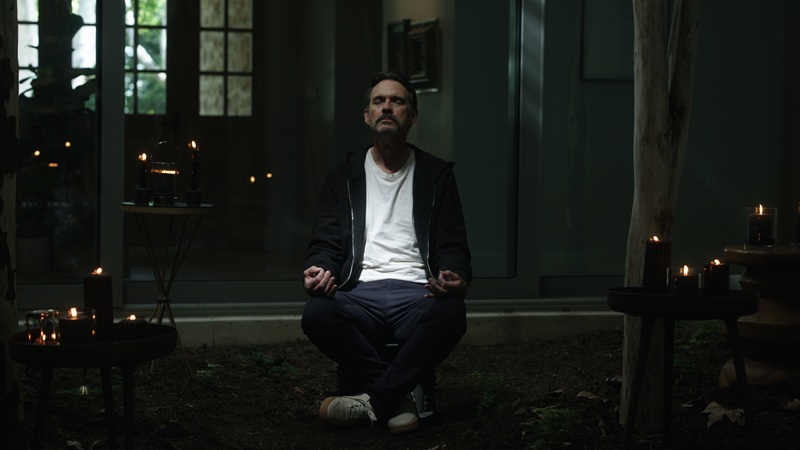
That curiosity extends into the scriptwriting process itself. Collaborating with director Jozua Malherbe (alongside executive producers Tim Theron and Cobus van den Berg), Scott was instrumental in re-calibrating the narrative arc. “The script I read originally… I looked at it and thought, okay, so this is a beginning. They changed quite a lot of the character in terms of his story arc. I gave them my notes on what I thought needed to change, and they made it a lot better – more complex, more nuanced.”
When prompted on whether he leans towards heroes or heavies, Scott rejects the dichotomy outright. “I like playing complex people. I think writers quite often enjoy writing villains, because it’s: How bad can we make them? What extremities can we put this character through, and justify it by saying he’s psychopathic or sociopathic?” For Scott, whether embodying an eccentric, spy-training headmaster or an outright monster on a Bulgarian set, the baseline requirement remains identical: “I look at what’s in front of me, and I try and humanise them.”
Grit, Heritage and Creative Ownership
Surveying his extensive body of work – from the rebellious, dark-edged energy of Twin Town and his breakout role in the BBC’s Iain Banks adaptation The Crow Road, through to cerebral cinema like Enigma and Ripley’s Game – Scott points to a deeper labour of love as his proudest achievement: Irvine Welsh’s Crime.
“I’d say Crime, because I produced it as well,” he reflects. “It took us a long time to get that made, and that was a lot of grit and determination.”
Portraying the tormented, addiction-riddled Detective Inspector Ray Lennox required not just production stamina, but an emotional toll that proved difficult to shed at the end of a shooting day.
“Sometimes it stays with you quite a lot, depending on how high the stakes are. Someone like Lennox in Crime… it’s so dark that you can’t really leave that behind; you’re always thinking about it. In the morning, I’d wake up and watch documentaries about serial killers, extreme killers – people who did terrible things. But that’s the world the character is involved in, and in a way, it keeps you on the track of the character’s path.”
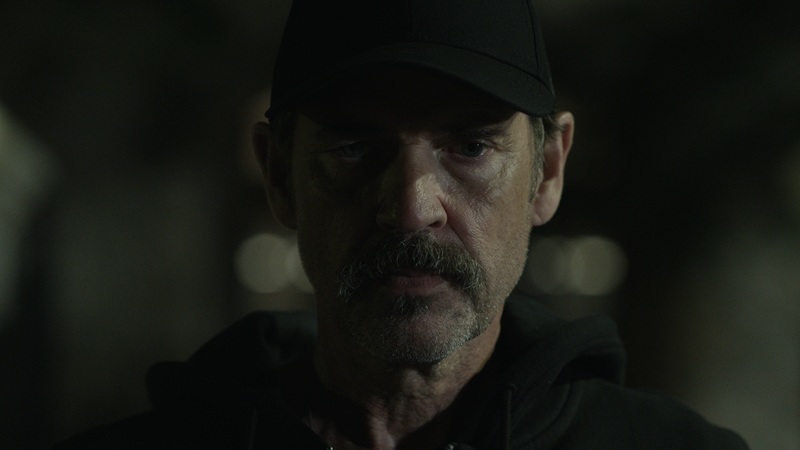
That dark psychological immersion yielded moments that linger uncomfortably long after wrap. Scott recalls one sequence that continues to haunt him: the discovery of a murdered schoolgirl on Edinburgh’s Calton Hill.
“Lennox is convinced the real killer is still free. A girl goes missing right at the beginning of the drama, and his instinct is that if we don’t get her immediately, she’s dead. And then she’s found on top of Calton Hill, propped up against a pillar. That extremity of violence… it’s just pure evil behaviour which is, in some cases, unexplainable. That makes it even more terrifying, because there is no reason for it other than a human being making a choice to create unrecoverable pain and misery for the families, and for that girl. You look at that and just think: what a frigging world we live in at times.”
The Eye of the Hurricane
On a bustling film set, where technical chaos, shifting lighting setups, and crew logistics constantly threaten an actor’s concentration, presence of mind is an essential discipline.
“You become adept at blanking out extraneous noise,” Scott observes of his technique. “Sometimes you actually try and use the distraction around you in order to focus. If there are lots of people moving around in your eyeline, it can irritate you, but other times it inspires you to dial in. Preparation gives you the confidence to jump into it.”
He also admits to using immersive technique as a practical shield. “If you’re playing an Old Etonian who sounds and behaves entirely differently from yourself, you just stay in it. It stops people asking you lots of annoying questions on set, because they look at you and wonder, ‘Who is he? I thought he was Scottish?’ It’s actually quite a useful tool.”
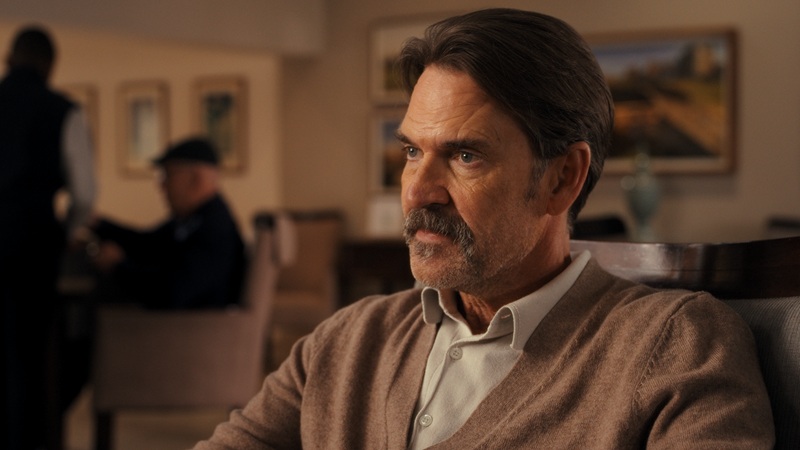
This brings us to the elusive “Dougray Scott factor” – that unmistakable intensity that defines his screen presence. When pressed, Scott deflects with humble modesty before acknowledging the lived experience beneath the craft.
“You learn early on that not everybody likes you – it’s an entirely subjective industry. But because of who I am, where I was brought up, and what my experiences are… I don’t have a stand-up comic’s stage energy. I have an energy that is…”
Grounded, I suggest.
“Yeah, grounded,” Scott agrees, leaning into the description. “Playing someone like Ray Lennox, who is completely different from me, is still a world I understand. I was brought up in that council estate environment in Scotland – the roughness, the toughness and the severity of it. I don’t have to do research for the environment or the culture; that experience is already there. The police procedural stuff and the man’s obsession require research, but the world itself is in the blood.”
As our time wraps, I ask whether – with the benefit of hindsight – he would alter anything in his storied, sometimes tumultuous journey through cinema. “Everything!” he laughs warmly. “And yet, you can’t. You live with the choices you’ve made. Once you turn to gratitude, as opposed to complaints or ‘wish I hads’, you realise you just have to learn from the past and avoid repeating mistakes. I always set out to play varied characters. Everyone has a strength, and while I enjoy playing to mine, I like to mix it up. In that respect, I’ve been very fortunate.”
Grounded, uncompromising and relentlessly searching for the pulse beneath the prose, Dougray Scott remains one of contemporary cinema’s most compelling craftsmen – an actor who understands that truth is rarely found in the pristine light, but carved out from the shadows.