Carel Nel on Craft, Conviction and Surviving the Trenches of Cinema
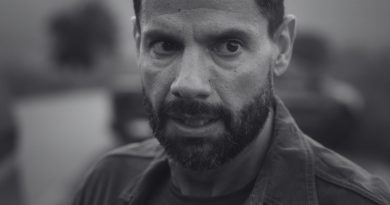
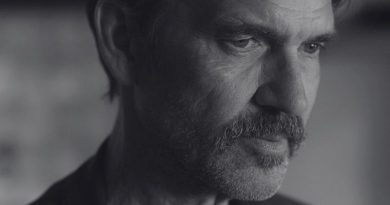
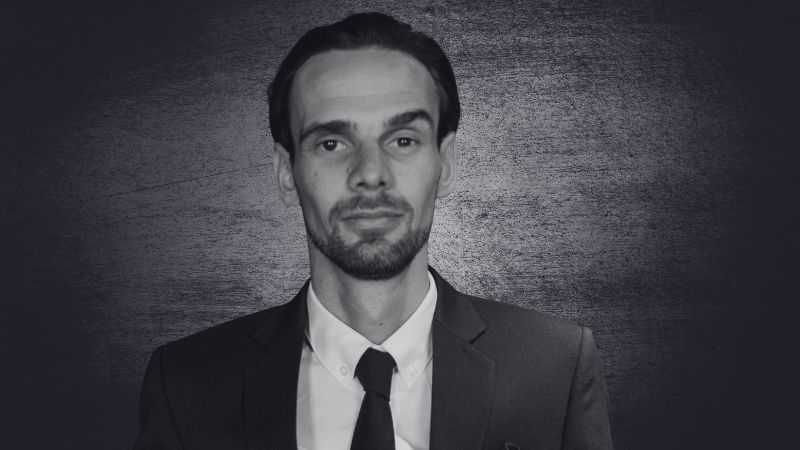
Carel Nel is one of the most compelling, chameleonic performers working in South African cinema and theatre today. Whether anchoring the hallucinatory, moss-laden dread of Jaco Bouwer’s eco-horror Gaia, trading dramatic blows opposite Rutger Hauer in Jan Kounen’s Flight of the Storks or capturing the fragile humanity of Christian Barnard on screen in Hartstog, Nel brings a rigorous, fiercely committed physicality to his roles. He belongs to that rare breed of screen actor whose transformative range is matched by an absolute, stubborn refusal of vanity.
Sitting down to unpack his process, what immediately stands out is not the glamour often projected onto the industry, but Nel’s hard-nosed, blue-collar appreciation for the mechanics of dramatic storytelling. For him, acting is neither an exercise in ego nor a pursuit of the spotlight; it is a discipline of radical empathy, technical preparation and enduring resilience in an unforgiving landscape.
The German Awakening and the Grey College Turning Point
Nel’s entry into performance was neither instantaneous nor dynastic. Raised in Bloemfontein within a medical household – his father was a doctor and his mother a nurse – the arts were hardly an established family pursuit. The lightning strike arrived unexpectedly during a high school exchange programme in north-eastern Germany.
“The family I was staying with constantly told me I needed to become an actor, just from the way I told stories,” Nel recalls. “They took me to Berlin, and I had my first ever proper experience in theatre watching ‘The Hunchback of Notre Dame’ at the Berlin State Theatre. There was nothing on stage except this massive bell hanging at the top. All of a sudden, these one-by-one metre hydraulic blocks started rising out of the floor, creating stairs as he stepped up. He just walked up into the air on these blocks. Sitting there, I was completely blown away. I thought, ‘Is this something people actually do for a living?'”

Upon returning to Grey College – a traditional sporting stronghold where Nel humorously admits he “sucked at the things everyone else was good at” – a school play competition adjudicated by university lecturers earned him a Best Actor prize.
Although he initially enrolled in law, the sudden passing of his father during his first year brought life into sharp perspective. With his mother’s blessing, he abandoned the law books, pulled pints behind a local bar in Bloemfontein for six months, and committed fully to drama school under the mentorship of the revered theatre academic Gerben Kamper.
“Gerben was in his sixties at the time, and he taught me that you learn every single day about acting,” says Nel. “By watching people, watching other actors, making mistakes, being bad in a play – you learn from everything. The moment you think you know everything, you’ve got big problems.”
“Know Your Words, Then Forget Them”
Nel’s breakthrough came when theatre veteran Albert Maritz took a gamble on casting him – a decade younger than the role was written – as the lead in Chris Barnard’s canonical drama Die Rebellie van Lafras Verwey, a performance that earned Nel a Fleur du Cap Theatre Award. Since then, his approach to screen craft has evolved into a meticulous hybrid methodology.
Borrowing from Ivana Chubbuck’s objective-driven technique, Nel dissects scripts with forensic intensity. Every character receives a primal objective, fractured into scene-by-scene obstacles.
“I read the script as many times as possible,” Nel explains. “My wife laughs at me because she’ll come in and find me lying on the couch staring at the ceiling. She’ll ask, ‘Don’t you need to work?’ and I tell her, ‘I am working.’ I’m running the scene visually in my head. I look for the character’s overall objective – an inner human desire like wanting to be loved or validated. Then every scene objective becomes a link in that chain. When a character feels sorry for themselves, I check out. As an audience member, I want to watch you fight to win your goal, not watch you sulk.”

“If you have one job on a film set, it’s this: know your words. I learn all my lines before we shoot a single frame. When you get to set, you forget everything and just play. If you’re not fully present, the moment passes you by.”
This prep work extends to sensory architecture: bespoke mood boards on his iPad, meticulous accent notes, and character-specific playlists dominated by melancholic Radiohead tracks. He laughs, “it connects to the performance so deeply that it ruins the song for the rest of my life”.
Crucially, Nel draws a hard line against vanity on set. He strictly avoids playback monitors – a trap he believes tempts actors into directing their own visages rather than serving the frame. “The director might want an unflattering angle to evoke a specific emotional response from the audience,” Nel observes. “The second an actor runs to playback, worries about how they look, and adjusts their head to catch better light, it’s not about the character anymore. That is the death knell of a performance.”
Darkness Without Judgment: From Roots to Gaia
Nel’s appetite for complex, often unsettling character work was put to an excruciating test in Philip Noyce’s 2016 remake of Roots. Cast as the slave ship captain William Davies opposite Malachi Kirby’s Kunta Kinte, Nel found himself filming deeply traumatic sequences in a claustrophobic ship hull constructed in Salt River, surrounded by non-professional background actors recruited from local townships.
“Malachi and Philip wanted me to truly go for it during the force-feeding sequence,” Nel reflects quietly. “We established safe words and physical cues, but it was harrowing. Crammed into that sweltering hull, forcing food down his throat while a hundred extras watched with genuine disdain in their eyes – it was horrible. I went home to my wife and questioned whether I could stomach doing scenes like that.”
To inhabit men capable of monstrosity, Nel maintains that emotional objectivity is essential: “As soon as you judge your character, you’re screwed. You can’t play them from the outside. For William Davies, this was business; it was farming. Slavery was his horrific normal, providing for his family. If you inject modern guilt or moral hesitation into a man like that when the historical reality didn’t hold it, the performance rings false.”

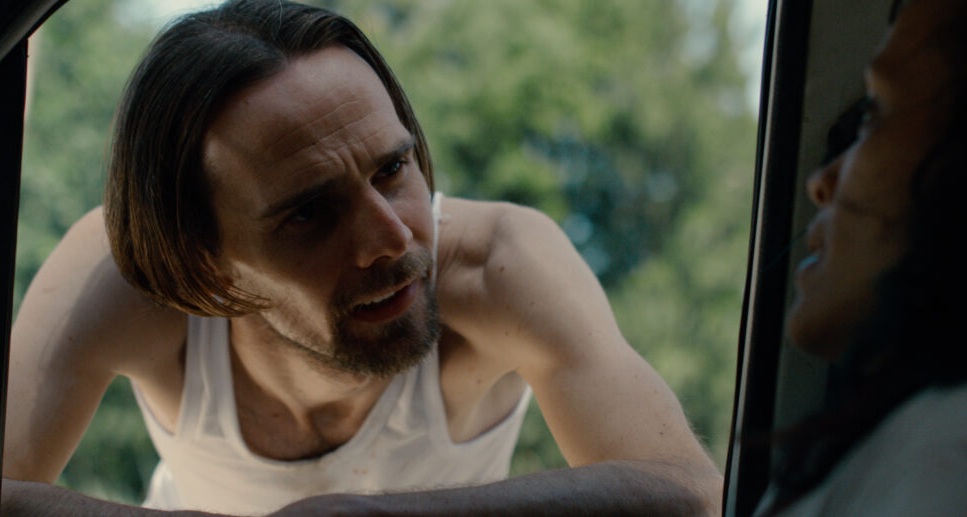
That uncompromising commitment paid remarkable dividends in Jaco Bouwer’s internationally acclaimed eco-horror feature Gaia, where Nel portrayed Barend, an off-grid survivalist surrendered to fungal ecology in the Tsitsikamma forest. Shot in just 15 days on an indie budget split by the onset of the COVID-19 pandemic, the production epitomised the collaborative grit of South African cinema.
“We all gave up half our salaries for shares because we believed in Jaco and writer Tertius Kapp’s vision,” Nel says. “During table reads, we realised Barend needed a defining philosophical thesis – his opus. Two hours later, Tertius emailed through that blistering monologue. When a production works in that kind of synchronicity, magic happens.”
The Theatrical Antidote to Ego
Having shared call sheets with international heavyweights ranging from Michael Shannon to Andrea Riseborough, Nel has observed a direct correlation between calibre and modesty.
“The best actors I’ve ever worked with are invariably the easiest, most humble people,” Nel notes. “Andrea Riseborough sat next to me in a courtroom set for three weeks and was simply extraordinary – utterly devoid of ego, deeply collaborative and technically brilliant. Most actors who carry that kind of generosity were theatrically trained. Theatre humbles you. When you’re doing stage work, you move your own set pieces, you assist with the lighting, you help with sound. You realise early on that you are simply one moving part of a massive storytelling collective.”
It is this team-sport mentality that anchors Nel’s perspective on the industry at large. When asked why he hasn’t joined the diaspora of performers attempting to crack the Hollywood machine from a base in Los Angeles, his answer is characteristically pragmatic.
“In South Africa, you never truly ‘arrive’, and that’s a healthy thing,” he reflects. “I get to work in English and Afrikaans, jump between theatre, television and film and collaborate with directors who challenge me. To young actors, I always quote ‘Survivor’: just stay in the game. Do the work, learn the lines, respect the crew and keep telling stories.”
Nel remains an actor’s actor: unconcerned with the superficial currency of the red carpet, entirely dedicated to dramatic truth, and always searching for the next impossible character to bring into focus.