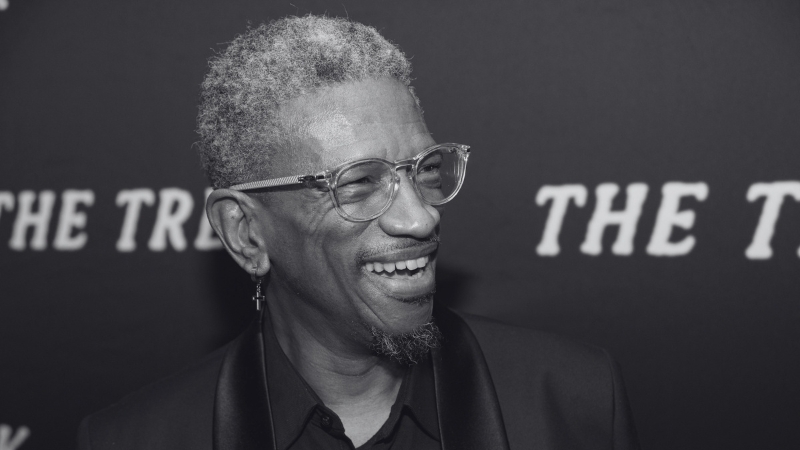
Maurice Carpede on Language, Desert Storms and the Survival of South African Film
When veteran actor and radio presenter Maurice Carpede submitted his self-tape for the 1800s period western horror The Trek, he had no idea he had already bagged the role of Atshumao. There was something in his eyes – an intense, grounded authority – that immediately hooked the director, Meekaaeel Adam.
What followed was an intense, deeply immersive journey into the Hantam Karoo, complete with click-language coaching, freezing desert winds and a production-halting dust storm. Spling sat down with Maurice to talk about the physical demands of playing Atshumao, the reality of local filmmaking and why South African audiences need to start falling back in love with their own cinema. The Trek opens nationwide in South Africa on 31 July.
Bringing Atshumao to Life: Clicks and Cold Desert Winds
Landing the role of the tracker Atshumao was not just a matter of stepping onto set; it required mastering the complex phonetics of the !Xun language and battling extreme environmental conditions.
“I was a bit worried in terms of making him as authentic as possible. In South Africa, we are very sensitive when it comes to culture and traditions. When I heard I needed to speak !Xun, I was like, ‘Are you for real?’ I had to learn to speak the language, and I had to practice, man! I stood in front of the mirror, literally saying all these words.”
With the help of language advisor Colin Meyer, Maurice threw himself into the technical side of click sounds and dialect work. But mastering the language was only half the battle, as the elements in the Northern Cape proved just as formidable.
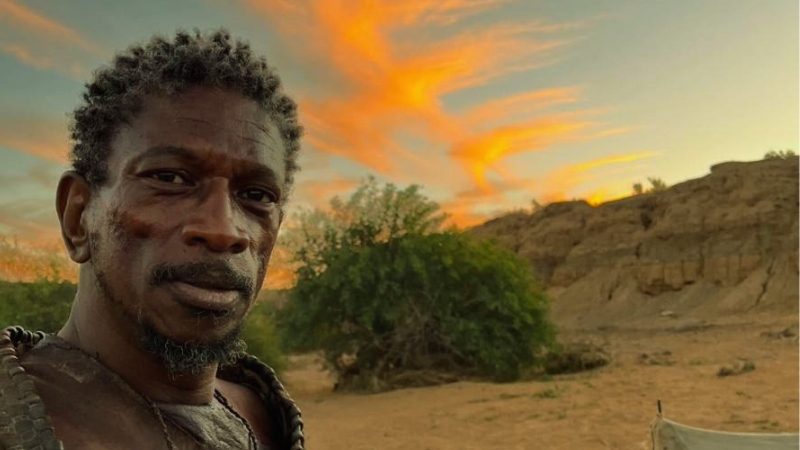
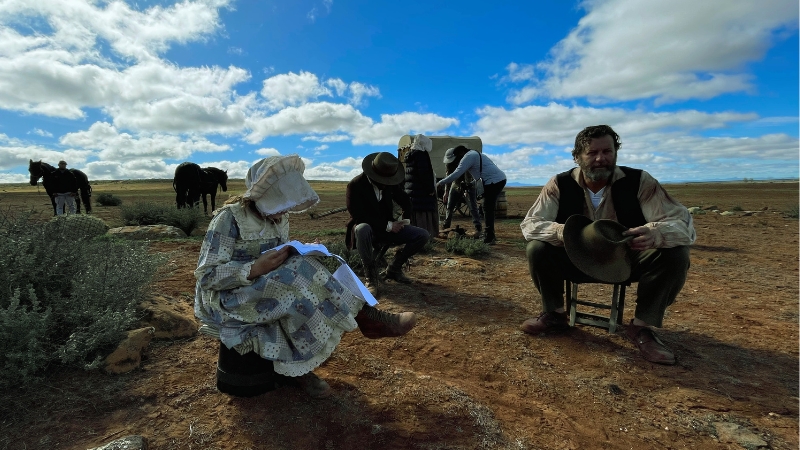
Filmed on location on farms outside Nieuwoudtville in the Hantam Karoo, the setting offered no respite from the elements. Dressed in minimalist leather skin attire that provided almost no protection against the biting desert winds, Maurice had to find a mental strategy to deal with the intense freeze.
“When that wind picked up, I literally would be sitting there shivering… Then when they started rolling again, I’d literally self-combust! Put myself up in flames – I’m warm, I’m hot, I’m okay – and just do the scene.”
Behind the Scenes: Housemates and Dust Storms
Despite the brutal temperatures, the tight-knit cast – including Rob van Vuuren, Trix Vivier, Morné Visser and young newcomer Leah Lindque – formed a deep bond. Rob, Trix and Maurice shared a house during the shoot, turning post-filming dinners into informal creative workshops.
“We would literally, after a day’s shoot, sit there, have dinner, have a glass of wine or a glass of whisky, and chat about the film, about the script, chat about the next day’s scenes… In that way, we kind of helped each other find what we needed to do.”
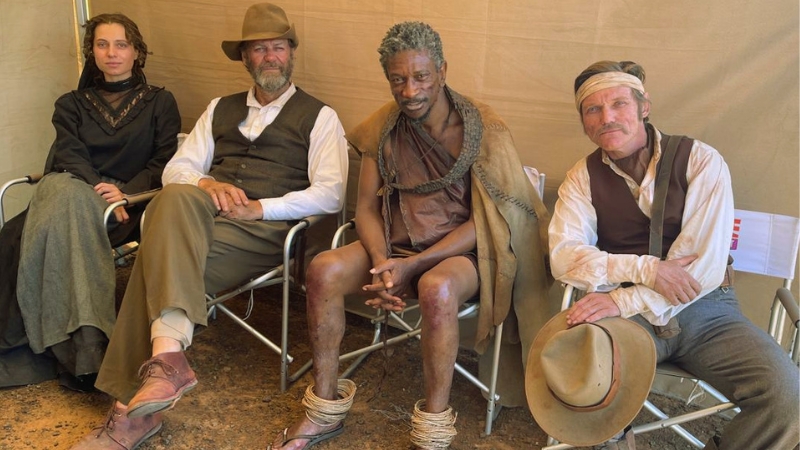
That camaraderie was put to the ultimate test on the final day of filming when a massive dust storm swept across the set, forcing production to halt completely. With return shoots financially impossible, the team had to adapt on their feet, tweaking the script to bring in essential narrative beats without returning to the Karoo.
The South African Film Stigma: Overcoming the Self-Esteem Crisis
Our conversation naturally expanded to the broader landscape of South African cinema. Despite producing world-class storytelling with a fraction of Hollywood budgets, local films often struggle to fill seats at home.
“I was chatting to a guy from the Mail & Guardian about the fact that South Africans don’t watch our own things for some reason…”
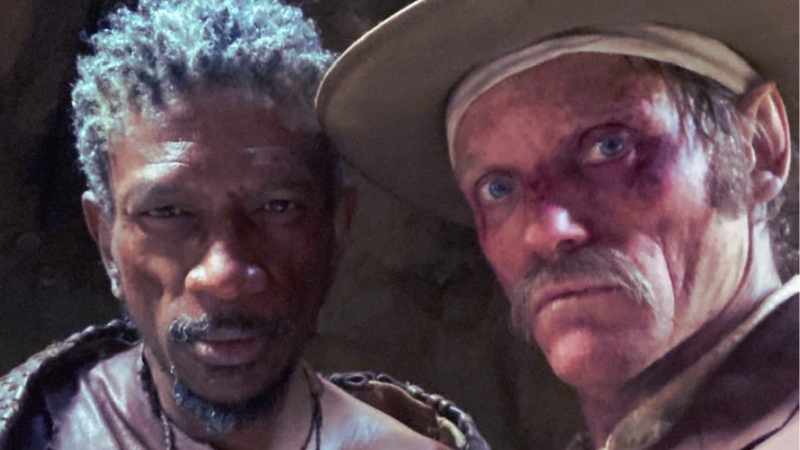
It’s a stigma and South Africa seems to have a low self-esteem as a creative nation. We can’t actually decide what’s good coming out of South Africa; we have to be told what is good from the outside. Maurice recalled a striking story told to him by legendary actor Owen Sejake to illustrate the cultural divide:
“Owen did a play in New York… The theatres were filled every single night; it was sold out in advance. They treated him like a Hollywood star – fetched him from the hotel in a limousine. Here in South Africa, he goes to set taking a taxi. Nobody takes our artists seriously in this country for some reason.”
Starstruck Moments: The Sean Penn Incident
With 27 years in commercial radio and a prolific screen career ranging from Generations and Arendsvlei to Neill Blomkamp’s Chappie, Maurice is rarely shaken by star power. However, he admitted to one hilarious moment of sheer panic during a table read for Sean Penn’s South African-shot drama The Last Face.
“You get told by your agent, ‘Do not ask for selfies. Do not speak unless spoken to…’ So I arrive at the office, and Sean Penn is standing outside having a cigarette… He comes up and says, ‘Hi, I’m Sean,’ and extends his hand to me.”
“I was like, ‘Did they say I must shake hands or not? I can’t remember!’ So I was like, ‘Mr Penn…’ and I just walked in! I’m like, ‘You dumb ass! You could have shaken this man’s hand!’ Meanwhile, I was just completely starstruck.”
“Get In, Get Deep, Get Out”: A Philosophy on the Craft
Whether dealing with heavy dramatic themes in Atlantis or playing ruthless antagonists in television dramas, Maurice maintains a strict psychological boundary to safeguard his personal well-being. Rather than digging up personal past trauma to evoke emotional responses, Carpede focuses entirely on the character’s immediate circumstance.
To preserve his sanity on set, he maintains a firm rule regarding emotional immersion:
“Get in, get deep, get hard. When the director says cut – get out. I’m not going to stay in that character’s mind all the time, otherwise I’ll go crazy.”
For newcomers entering the industry, his advice remains equally grounded and practical:
“Just enjoy the process. Have fun! Live in the moment… It’s better when it’s fun.”
Maurice Carpede’s performance in The Trek is a testament to what happens when deep discipline meets raw talent. As South African cinema continues to push genre boundaries, The Trek stands as a bold, atmospheric step forward – and a reminder of why our local stories deserve our full attention.