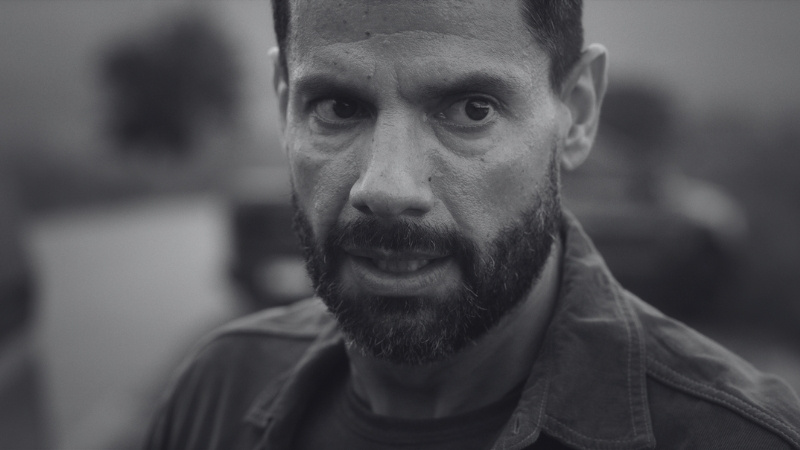
Tim Theron on Navigating the Producer-Actor Divide
There’s an inherent paradox in carrying both the producer’s ledger and actor’s emotional canvas on a film set. One demands unflinching macro-management: schedules, logistical compromises and bottom lines. The other requires total vulnerability, narrow focus and immersion in the beat of a scene. Few working in South African cinema navigate this tightrope with as much restless drive as Tim Theron.
From his breakout presence in romantic comedies like Klein Karoo to gritty, kinetic turns in Jagveld and Heart of the Hunter, Theron has steadily carved out a niche. Sitting down to discuss his creative trajectory and the new Deon Meyer series Invisible at the 12 Apostles Hotel, Spling finds an artist thoroughly unpretentious about his craft, intensely dedicated to the practical mechanics of narrative and keenly aware of the synergy required to sustain an indigenous screen industry.
Switching Hats
For Theron, producing was never just an administrative title; it was a pragmatic necessity born from a desire to take agency over storytelling. Yet on set, shedding these kinds of logistical tasks to step in front of the lens remains an active negotiation.
“You’re never able to completely take that producer hat off. There’s a little voice in the back going, ‘I just spoke to Cobus, and he told me the catering was late,’ or whatever. But Cobus, my producing partner, really allows me the space to switch hats. That’s where it’s vital to have a director like Jozua [Malherbe], who respects that I’m involved on both sides. He can just pause during a shoot and say, ‘Take a moment. This is where you are emotionally. Now let’s go.’ It’s never easy, but I enjoy that tension.”
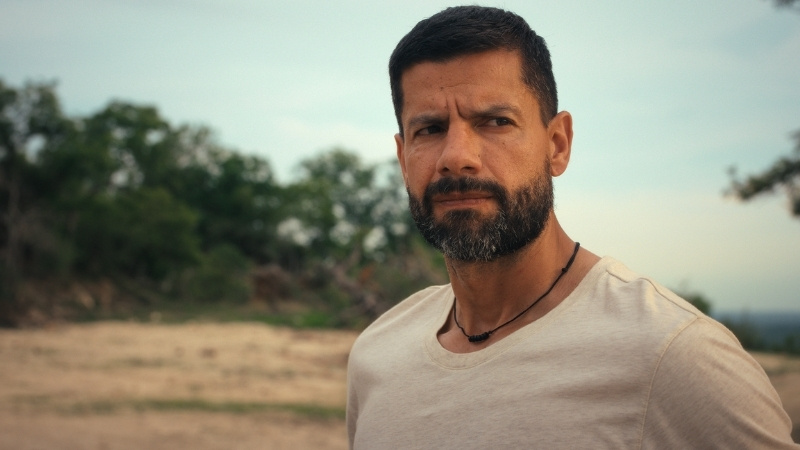
That artistic alliance – formed between Theron, partner Cobus van den Berg and acclaimed crime novelist Deon Meyer under the banner of Scene 23 – has proven to be one of the most prolific engines in modern local film and television. Adapting literary works requires an acute appreciation of cinematic pace, a quality Theron identifies immediately in Meyer’s prose.
“We started working with Deon just after we made Jagveld. His books are cinematically written; as you’re reading, you see the compositions and the camera movement. You instantly recognise, ‘We can shoot this.’ We’re exploring subsequent books, and Deon is writing scripts directly. Our process always starts from that producing baseline: evaluating intellectual property, finding scripts that are commercially viable, and only then asking if there’s a role within it that suits me.”
Finding the Beat
When it comes to his process between calling action and cut, Theron favours an instinctual, character-focussed determination. Rather than adopting strict method techniques, he constructs personal narrative architecture long before the first rehearsal.
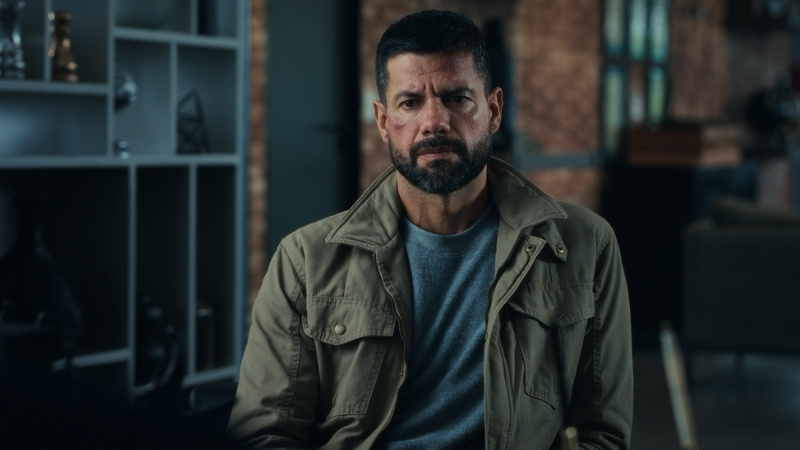
“I don’t have the discipline to stay in a character constantly. What grounds me is story. I start immediately on a character’s backstory, writing an essay or a private diary of what they think to find the psychology within myself. It’s about asking: if I had experienced those exact circumstances and made those same choices, how would I have arrived at this identity?”
Nowhere is this interior work more evident than in his nuanced characterisation of Dekker (based on and inspired by Meyer’s recurring literary figure Lemmer). Collaborating closely with director Jozua Malherbe, Theron sought a clean, visual entry point into the man’s moral code.
“Jozua and I developed this single visual image: every morning, Dekker sits on the edge of his bed, struggling with the thought of how to be a better man today. He doesn’t necessarily know how to achieve it, but the desire is there. That emotional baseline anchors everything.”
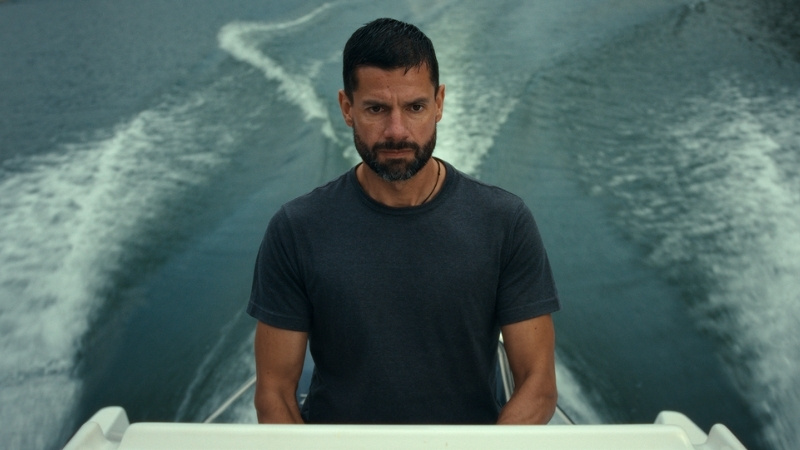
Contrasting this interior weight is the physicality of his more adrenaline-fuelled roles. Having handled high-octane set-pieces in Heart of the Hunter, Theron treats physical choreography not merely as spectacle, but as a way to tap into performance psychology.
“Leaning into that physicality and violence acts as an anchor. It pulls you directly into the scene. At the same time, I get bored easily. I loved the warmth of the rom-coms – audiences still stop me in the street about Klein Karoo – but versatility is everything. I started in improv comedy and still yearn to tackle a flat-out, uncompromised comedy, or an observational, slow-burn drama.”
The Everyman Dynamic
When assessing his place in the broader cinematic landscape, Theron remains refreshingly grounded about his screen persona.
“I’ve never had the illusion of being a Brad Pitt or a Tom Cruise. I identify far more with the Tom Hanks or John Krasinski mould – the relatable everyman who possesses the range to stretch across genres. Hanks has always been a benchmark for me because of that sheer versatility, spanning drama, sharp comedy and physical suspense with complete credibility.”
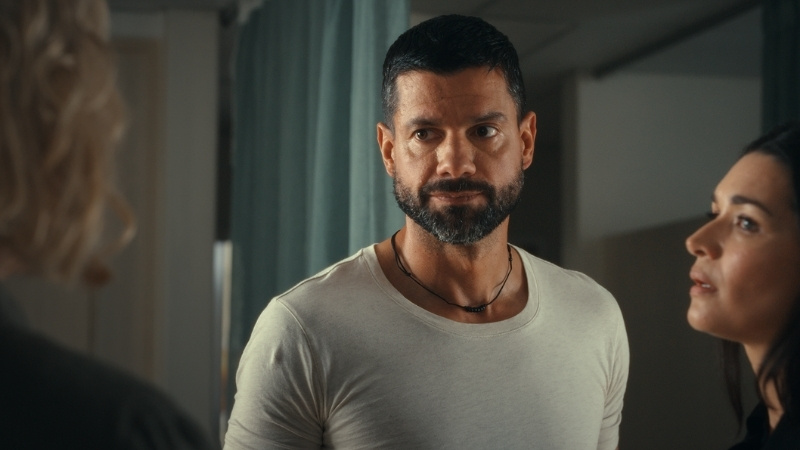
That humility extends to his creative ambitions behind the camera. While directing remains on the horizon, Theron values the candour that keeps Scene 23 functioning as a lean, self-critical unit.
“Cobus is an unapologetically clear-headed businessman. On Klein Karoo, he laid it on the line: ‘If this doesn’t work, you’re on your own.’ Audiences ultimately decide whether you have a career, whether they believe you as a leading man. That candour is invaluable. When I look at material now, we can be ruthlessly honest about what fits and what doesn’t.”
In an industry often caught between sheer survival and commercial compromise, Tim Theron’s career proves that enduring screen longevity requires both an artist’s emotional empathy and a producer’s sharp resolve. By treating every role – whether an enforcer, a romantic lead or an embattled protector – as a question of humanity first, he continues to help build an authentic cinematic language for South African storytelling.